A Factory Organized Around Reliable Wire Harness Production
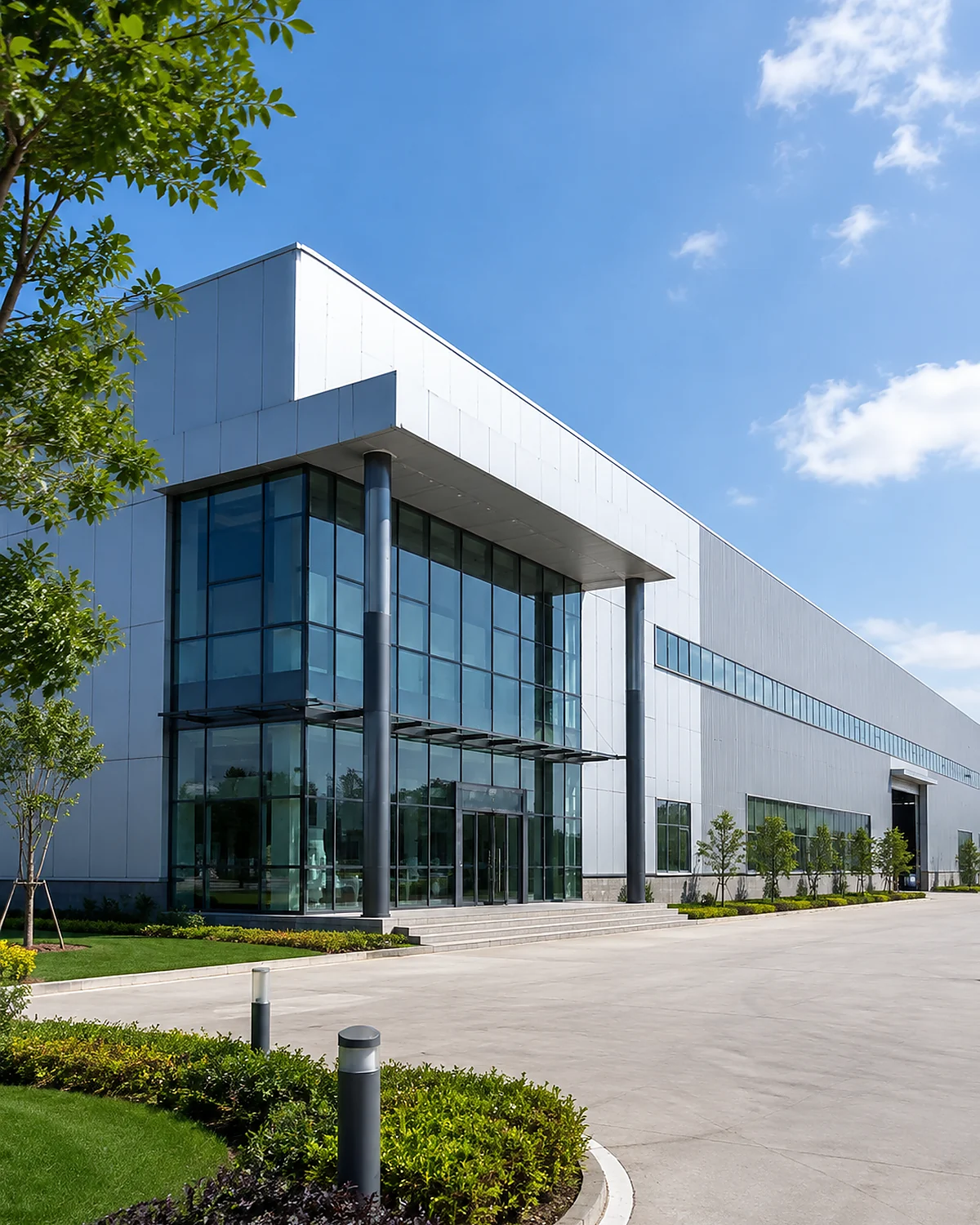
JowChain’s factory supports custom wire harness and cable assembly projects for automotive, electric vehicle, energy storage, robotics, industrial automation and electronic equipment applications.
The production environment is arranged around the real sequence of manufacturing work. Materials are identified and prepared before entering wire processing, terminal preparation, assembly, inspection and electrical testing. Approved project information follows the product through these stages so that operators, engineers and inspectors work from the same confirmed basis.
This structure supports both development work and repeat production. Samples may require closer engineering involvement and adjustment, while repeat orders depend on stable instructions, defined process points and consistent release criteria.
Clear Production Flow
Work progresses through defined areas instead of moving between unrelated stations.
Project-Based Control
Materials, drawings, inspections and testing follow the requirements of each program.
Flexible Order Support
Prototype builds, pilot quantities and repeat manufacturing can be handled within one system.
Connected Teams
Engineering, production and quality remain involved as the project moves through the factory.
Key Work Areas Inside the Wire Harness Factory
Each production area has a specific role. Keeping these stages visible and organized helps prevent material confusion, uncontrolled changes and inconsistent assembly between production batches.
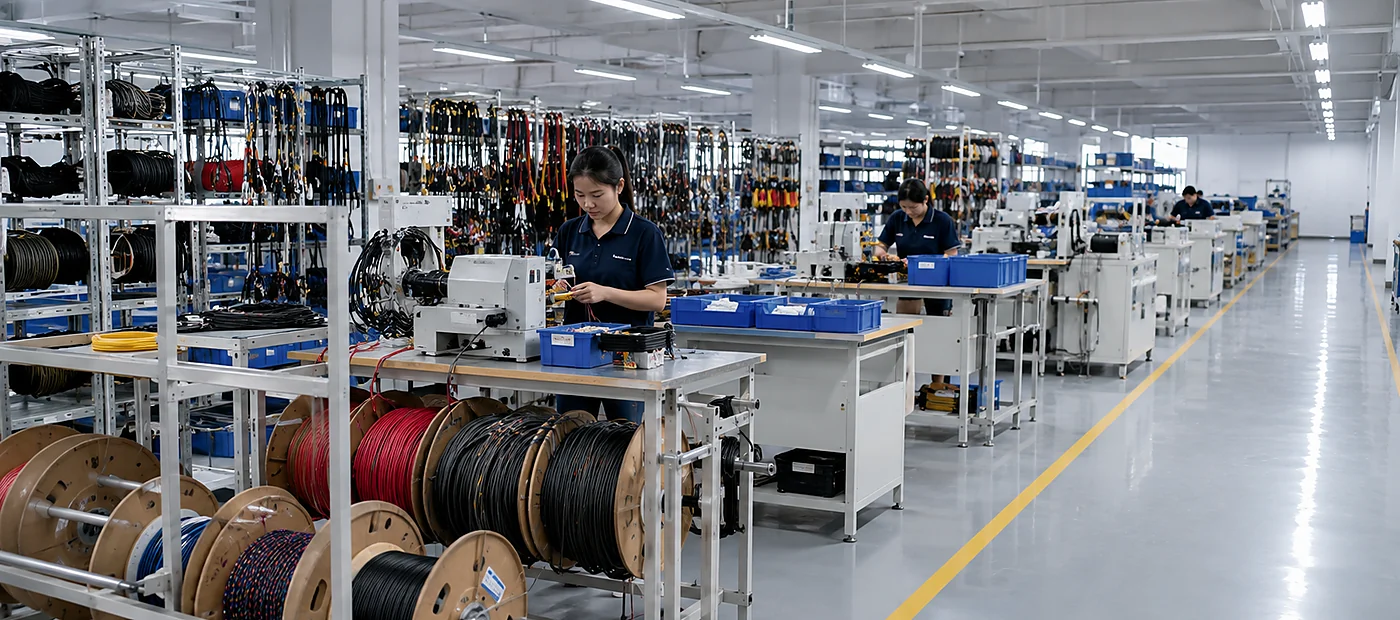
Wire Processing and Preparation
Wire cutting, stripping, marking and terminal preparation based on approved specifications.
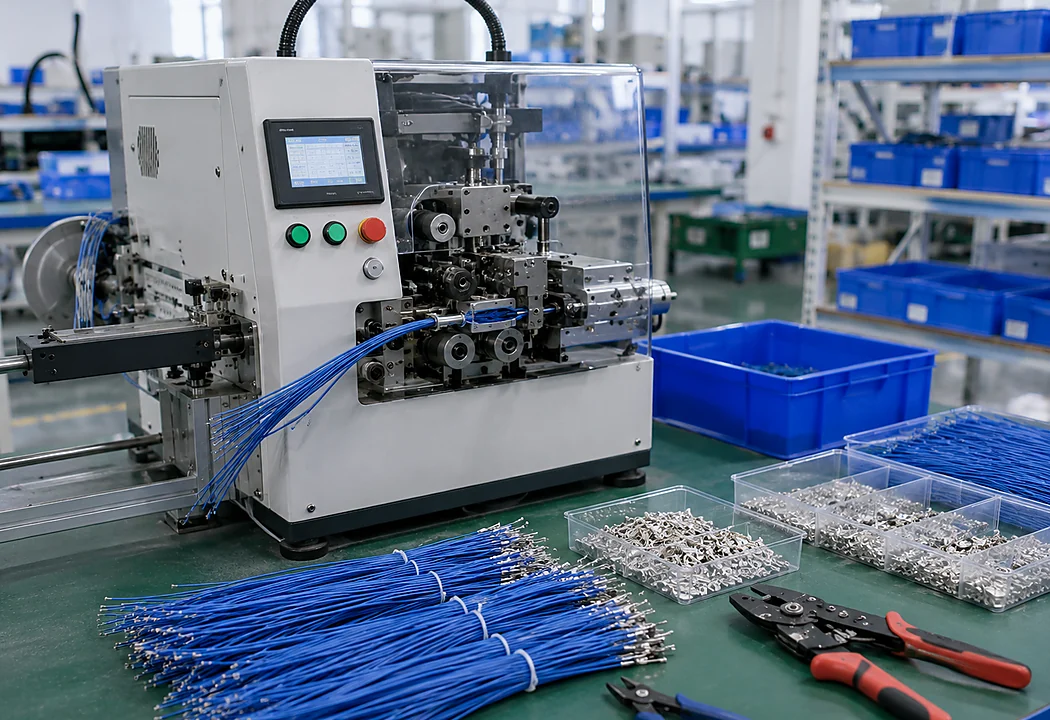
Crimping and Process Control
Terminal processing supported by the correct tooling, setup confirmation and inspection requirements.
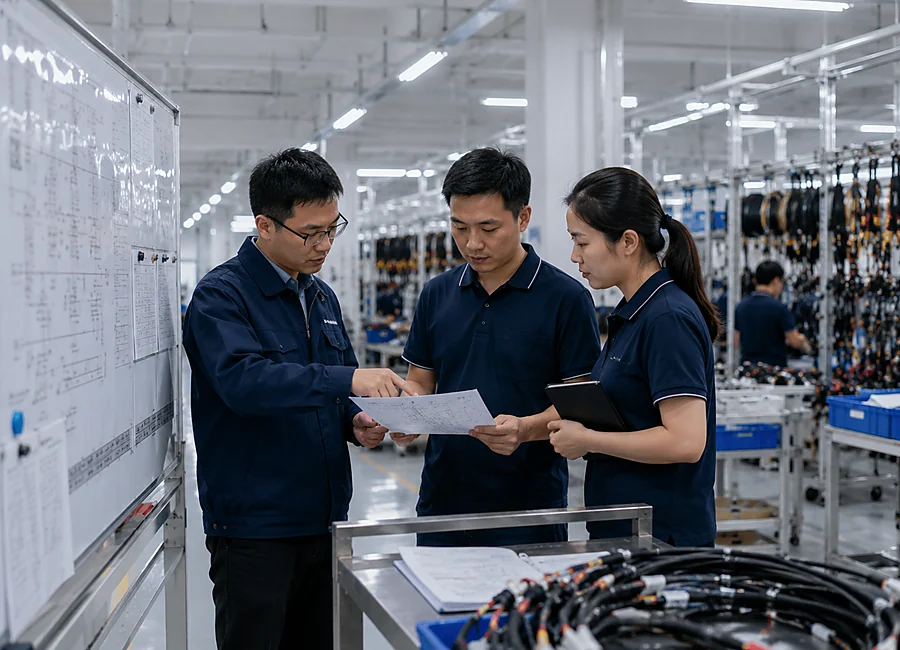
Production Coordination
Work instructions, materials and project changes are aligned before production release.
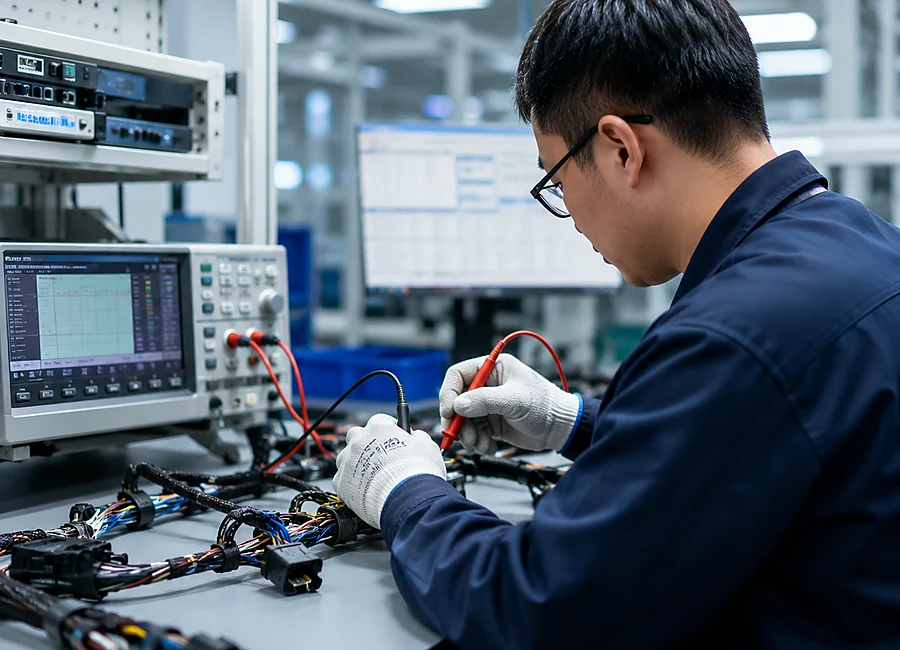
Electrical Testing Area
Continuity and project-specific electrical checks are completed before final release.
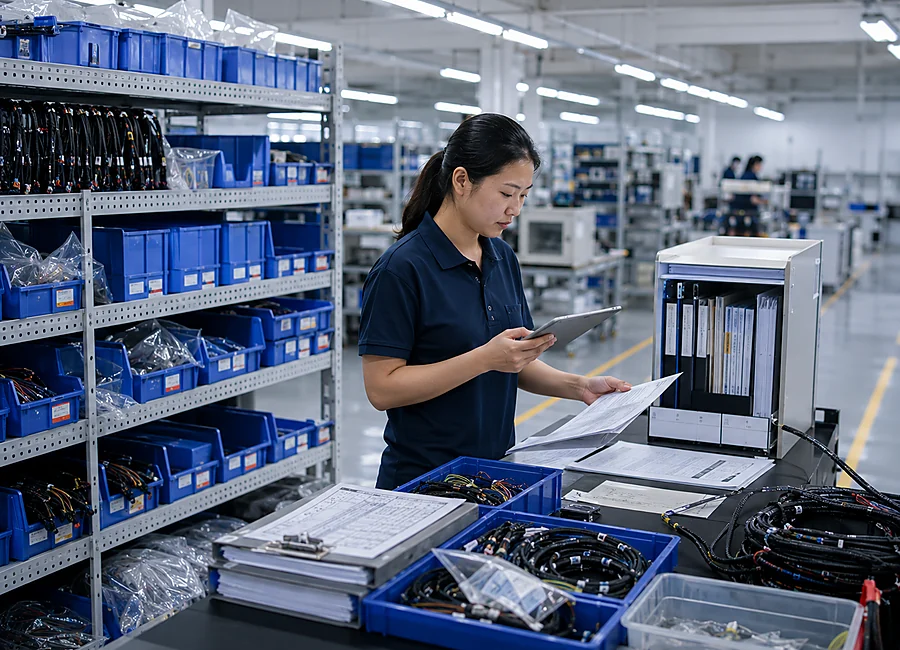
Material and Document Control
Material identity, project files and inspection information remain linked to the production task.
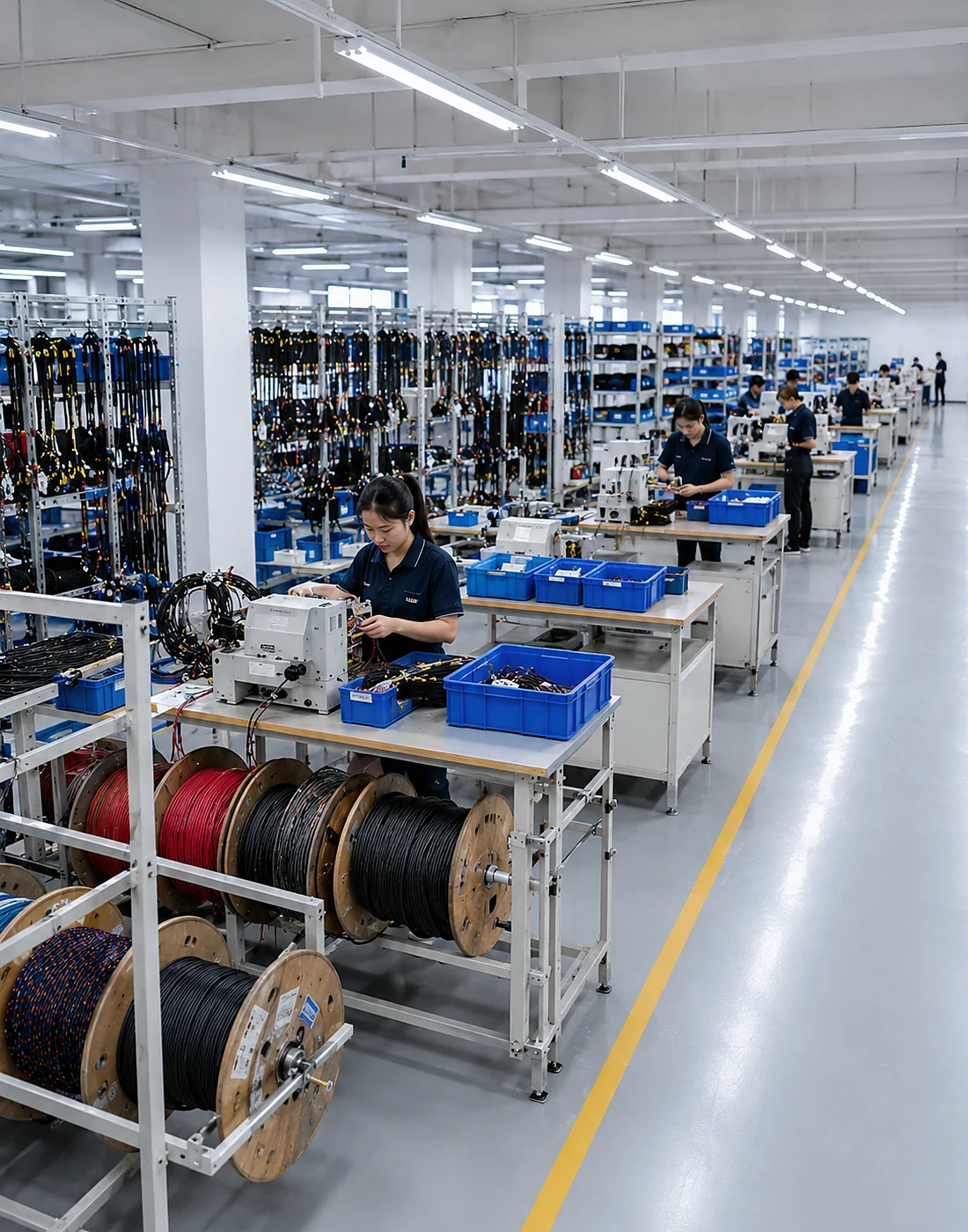
A Production Environment That Supports Consistency
Clear work areas, visible material flow and organized stations help the factory maintain stable execution across custom projects.
Clean Work Areas and Clear Production Responsibilities
A wire harness factory depends on more than equipment. The way materials, work instructions, in-process products and finished assemblies move through the workshop directly affects quality and delivery stability.
Organized Workstations
Tools, materials and project information are positioned to support efficient and repeatable assembly work.
Controlled In-Process Handling
Products remain identified as they move between processing, assembly, inspection and testing stages.
Visible Production Status
Production teams can follow order progress and identify open points before they affect later stages.
Consistent Housekeeping
Clean and orderly work areas reduce avoidable handling errors and support professional factory management.
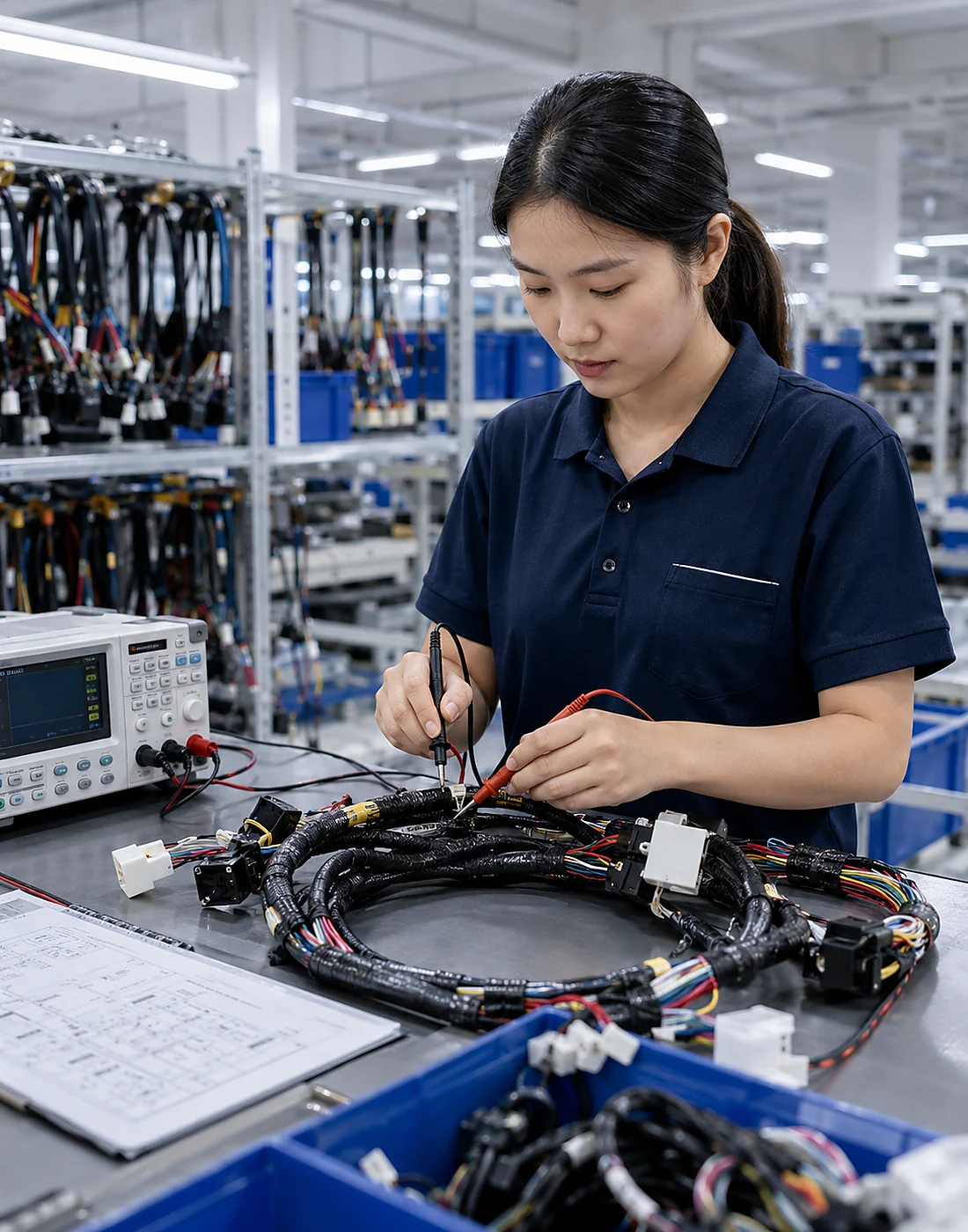
Quality Control Built Into Daily Production
Inspection is not limited to the end of the line. Quality checks are positioned around the stages where materials, crimping, assembly and electrical performance can be confirmed most effectively.
This approach allows the team to identify issues closer to their source and prevents an uncontrolled detail from being carried into repeat production.
Incoming Material Verification
Key materials are checked against purchasing and project requirements before use.
First-Article and Process Checks
Initial production results and critical process points are reviewed before full work continues.
Electrical Verification
Continuity and other agreed electrical checks are completed using the applicable test method.
Final Release
Finished assemblies are reviewed for appearance, identification, packaging and project compliance.
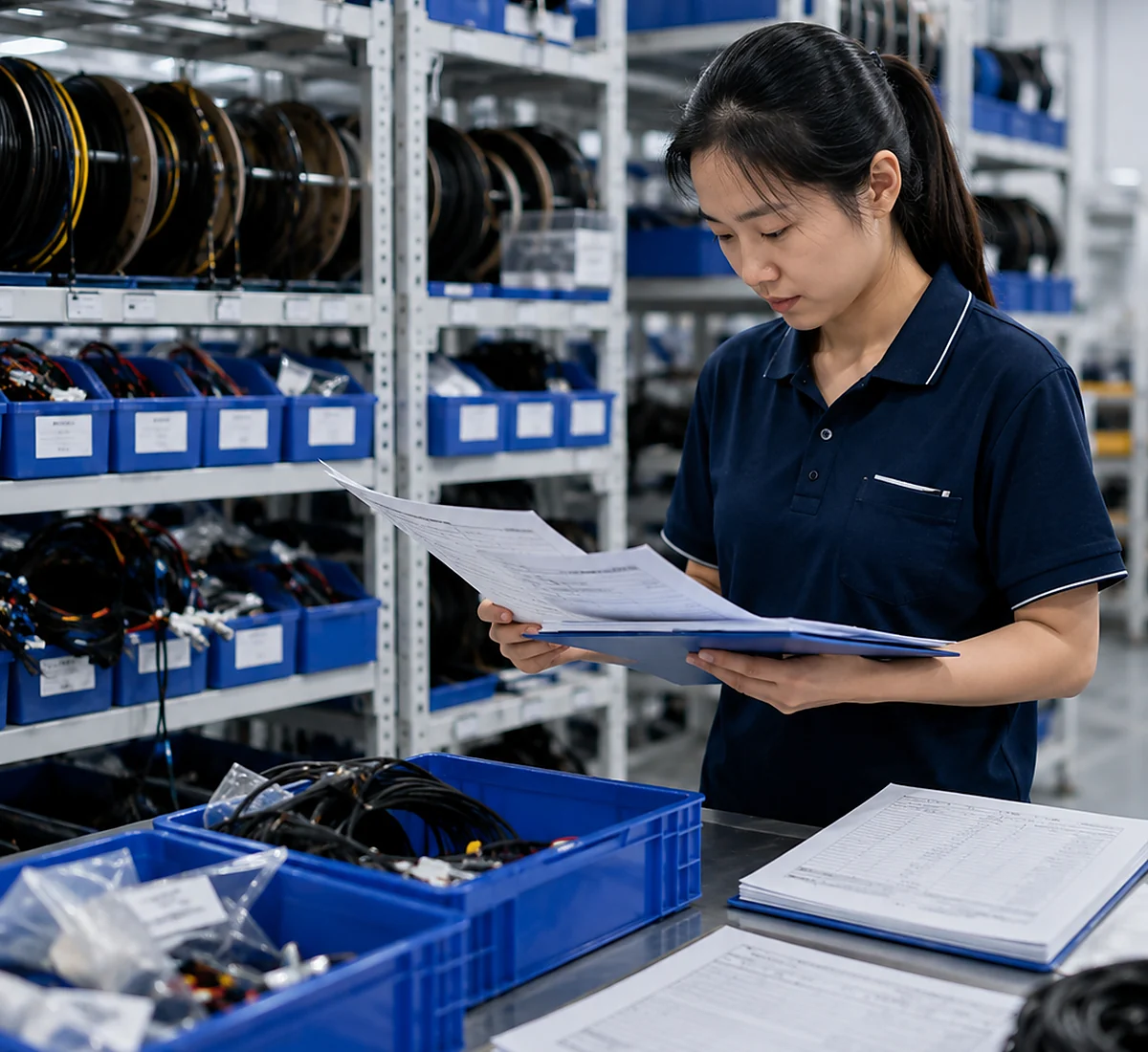
Material Identification and Storage That Support Traceability
Wire harness production involves many materials that may look similar while having different electrical or mechanical specifications. Clear identification and controlled issuing help the factory use the right material for the right production order.
Material records also provide a practical reference when repeat orders, engineering changes or quality reviews require the project history to be checked.