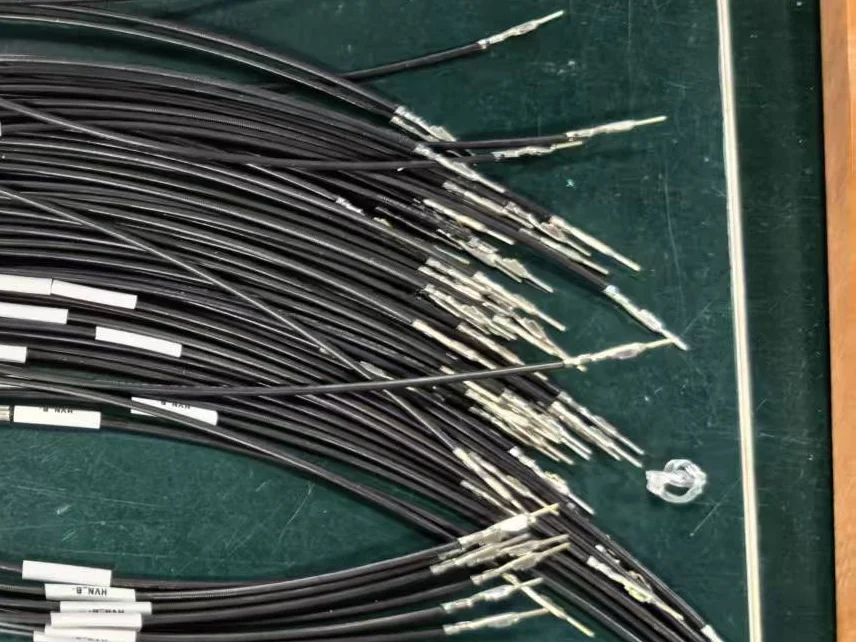
CUSTOM EV LOW-VOLTAGE HARNESS MANUFACTURING
Custom EV low-voltage wiring harnesses manufactured to your drawing, BOM, connector list and circuit requirements. Configure auxiliary, control and signal connections, branch lengths, connector housings, terminals, labels and protection for electric vehicle electrical assemblies.
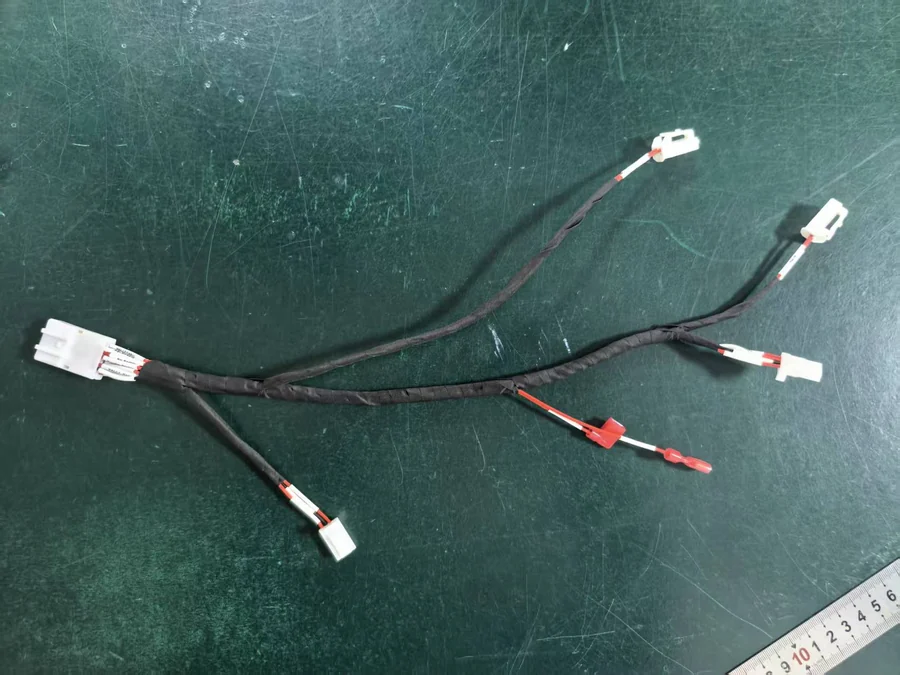
Auxiliary, sensing, control or other project-defined low-voltage connections.
Project-specified housings, crimp contacts and mating components.
Custom trunk, breakout points and individual branch dimensions.
Labels and circuit markers used for installation and inspection.
Sleeve, heat shrink or wrapping specified according to routing needs.
An EV low-voltage wiring harness organizes auxiliary, sensing, control and signal connections through defined wires, connectors, terminals and branch layouts. For accurate quotation, provide the harness drawing, wire BOM, connector part numbers, circuit or pin assignment, branch dimensions and required identification.
PRODUCT OVERVIEW
An EV low-voltage wiring harness groups multiple auxiliary, sensing and control circuits into a structured assembly. Connector branches, individual leads, terminals and labels can be configured around the equipment layout and approved circuit documentation.
JOWCHAIN manufactures these harnesses according to released drawings, BOMs and connector data so branch dimensions, wire identification and mating interfaces remain consistent throughout production.
For broader vehicle-level harness planning that also considers traction power, battery, charging and other vehicle connection systems, see our electric vehicle wiring harness solution .
LOW-VOLTAGE CIRCUIT ARCHITECTURE
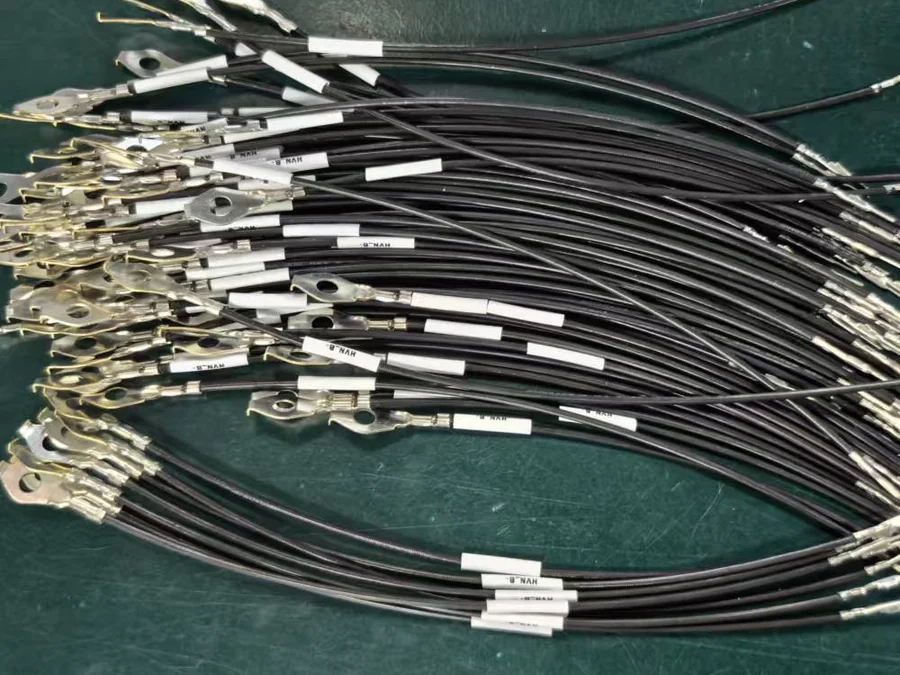
EV low-voltage harnesses may carry several different auxiliary and control circuits within one assembly. Circuit relationships should be defined first so wire specification, connector assignment and routing can be matched to the intended function.
Identify auxiliary, sensing, control or signal connections in the electrical documentation.
Confirm connector housings, terminals and mating components.
Set main trunk dimensions, breakout positions and individual branch lengths.
Label similar circuits and connector branches where installation clarity is required.
TECHNICAL SPECIFICATIONS
Final specifications depend on the vehicle electrical design, connector interfaces and routing requirements rather than a fixed catalog configuration.
| Wire Specification | Gauge, insulation and color according to approved BOM |
|---|---|
| Main Trunk | Customized according to installation routing |
| Branch Quantity | Configured according to circuit and connector requirements |
| Branch Length | Individual customized dimensions for each connection point |
| Connector Housing | Project-specified mating interface and part number |
| Crimp Contact | Matched to selected connector and wire range |
| Terminal Type | Project-defined terminal or connection interface |
| Identification | Wire markers, branch labels and circuit coding where required |
| Protection | Sleeve, tape, heat shrink or project-specified wrapping |
| Production Basis | Approved drawing, BOM, connector data and inspection requirements |
CONNECTION CONTROL
Connector and terminal selection should follow the actual mating interface rather than visual similarity. Each branch can use a different housing, contact or terminal depending on the connected vehicle component.
If your project is mainly defined by a large number of physical branches rather than EV-specific circuit functions, review our custom multi-branch wire harness structure instead.
BUYER SELECTION GUIDE
Similar-looking harnesses can serve very different electrical purposes. Start with the circuit and connection structure before selecting the product type.
Use this when the harness is specifically designed around electric vehicle low-voltage circuits.
Use a dedicated BMS harness when sensing, signal and connector pinouts are the main requirement.
Use a ring-terminal product when the assembly mainly terminates at bolted electrical or grounding points.
RFQ CHECKLIST
Terminal lead quotation becomes much easier when both termination sides and the wire specification are clearly defined.
COMMON SPECIFICATION MISTAKES
Low-voltage harness problems often come from connector, routing or circuit documentation rather than the visible wire itself.
Similar housings may not match the actual mating component.
Consequence: connector cannot mate correctly.A short or excessively long branch creates routing problems.
Consequence: tension, excess slack or installation failure.Similar branches can be confused during vehicle assembly.
Consequence: slower installation and connection errors.Overall harness length alone does not define breakout or connector locations.
Consequence: finished harness does not match vehicle routing.PRODUCTION & QUALITY CONTROL
EV low-voltage harness inspection should confirm component identity, branch dimensions, connector assignments, circuit relationships and identification against the released drawing and BOM.
Wires, connectors, contacts and terminals are checked against the approved BOM.
Trunk length, breakout positions and branch dimensions are verified against drawing data.
Connector and circuit relationships can be checked against approved documentation.
Connector labels, wire markers and completed assembly are checked before packing.
FAQ
Yes. Harness drawings, wire BOMs, connector data and circuit information are the preferred basis for defining branch layout, connector interfaces and production requirements.
Yes. Individual branches can use different connector housings, contacts and terminals when they are clearly specified in the BOM.
Yes. Main trunk dimensions, breakout positions and individual branch lengths can be manufactured according to the released drawing.
If BMS sensing, signal and connector pinout control are the main requirements, review our BMS Signal Wiring Harness instead.
Provide the harness drawing, wire BOM, connector and terminal part numbers, circuit or pin assignment, branch dimensions, protection requirements and expected production quantity.
Contact
Email: info@yihopolytek.com
China HQ
No199-200 Building E 1/F 2/F, Dongyang Road Tongan District, Xiamen, Fujian, China
Tel: +86-592-6038809
China Factory
3rd Floor, Building 101, No. 6 Fenglan Street,
Luquan District, Shijiazhuang, Hebei, China
Tel: +86 (311) 8693-5221
Philippines
Lot 12, Block 16, Phase IV,
Cavite Economic Zone, Rosario, Cavite 4106, Philippines
Tel: +63 (0) 46-437-8104
Industries
Medical
Robotics
Automotive
Aircraft
Marine
Agricultural
Solar
Consumer Electronics
OEM
Lighting
© 2007- 2026 3DFPR. All rights reserved.