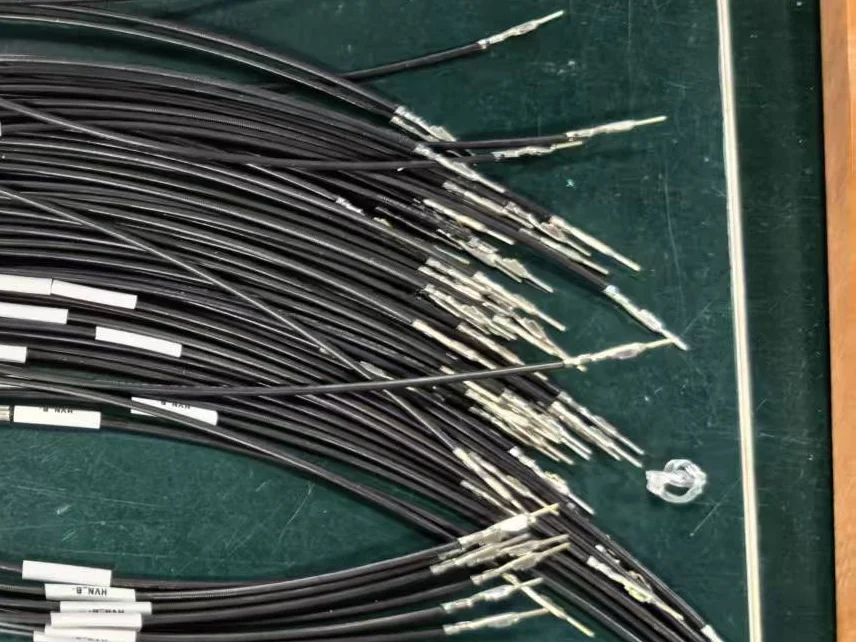
CUSTOM MULTI-CIRCUIT HARNESS MANUFACTURING
Custom multi-branch wire harnesses manufactured around your main trunk, breakout points, branch lengths, connectors, terminals and circuit identification. JOWCHAIN supports drawing/BOM-based OEM production for assemblies that require multiple electrical connections from one organized harness.
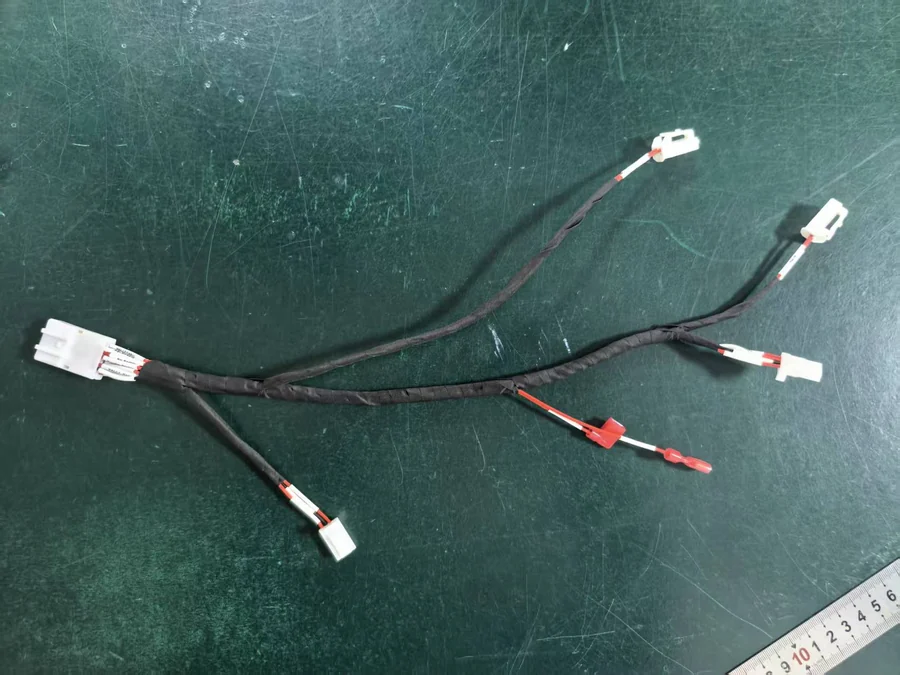
Define the central harness route and overall trunk dimensions.
Position each branch where the electrical circuit separates.
Control individual lead lengths for each mating connection.
Assign connector housings, contacts and terminals by branch.
Use labels or markers to keep circuits easy to distinguish.
A custom multi-branch wire harness combines one organized main trunk with several electrical branches leading to different connectors, terminals or circuit points. For accurate production, buyers should define trunk dimensions, breakout positions, individual branch lengths, connector pinouts and identification requirements in the drawing or BOM.
PRODUCT OVERVIEW
A multi-branch wire harness replaces several independent wire leads with one structured assembly. The main trunk carries the circuits along the primary route, while controlled breakout points separate individual branches toward connectors, sensors, terminals or other electrical interfaces.
JOWCHAIN manufactures these assemblies from approved drawings and BOMs so branch length, breakout location, connector assignment, wire identification and protective wrapping remain consistent between production batches.
BRANCH LAYOUT ENGINEERING
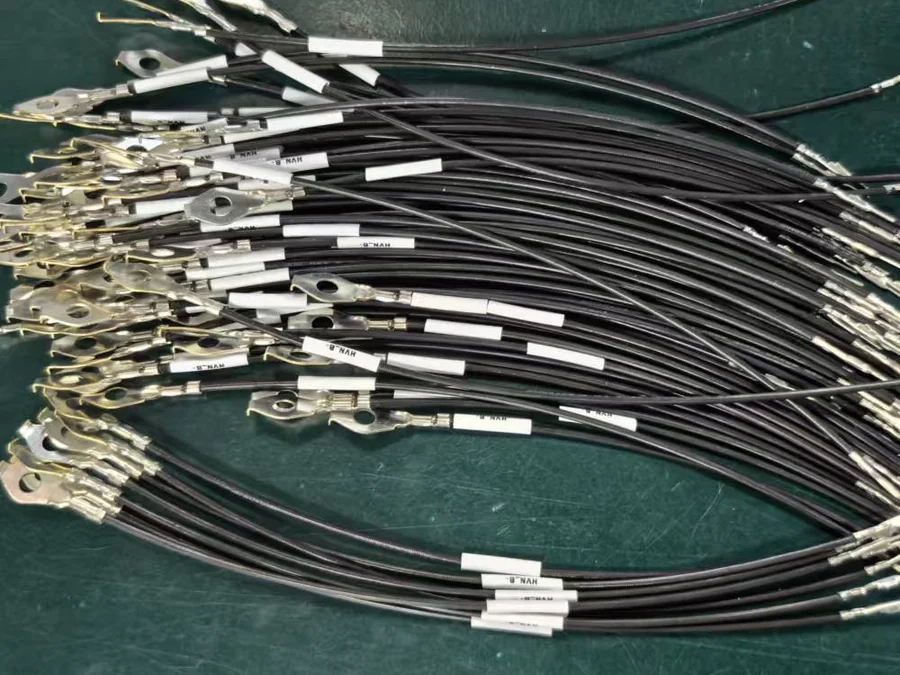
Multi-branch assemblies are easiest to control when the routing structure is defined first. Once the main trunk and breakout points are confirmed, individual connectors and terminal configurations can be assigned to each branch.
Confirm overall routing direction and trunk length inside the equipment.
Define where each circuit exits the main harness toward the mating device.
Set individual branch lengths to avoid excessive slack or short leads.
Match each branch with the required connector, contact or terminal.
TECHNICAL SPECIFICATIONS
Because branch count and connection layout vary by project, final specifications should be confirmed against the approved assembly drawing rather than treated as fixed catalog parameters.
| Main Trunk Length | Customized according to equipment routing requirements |
|---|---|
| Branch Quantity | Configured according to circuit and connector requirements |
| Breakout Position | Defined by drawing dimensions from reference points |
| Branch Length | Individual customized lengths for each connection point |
| Wire Specification | Gauge, insulation and color according to BOM |
| Connector / Terminal | Project-specified housings, contacts and terminal types |
| Protection | Tape, sleeve, heat shrink or project-defined wrapping |
| Identification | Branch labels, markers and circuit coding where required |
| Production Basis | Approved drawing, BOM, sample and inspection requirements |
CONNECTION DETAIL
A multi-branch harness may contain different connector housings, terminal types or circuit functions within one assembly. Treating every branch as identical can create mating, labeling or routing errors.
RFQ CHECKLIST
The more branches a harness contains, the more important it becomes to define dimensions and connection assignments before quotation.
COMMON SPECIFICATION MISTAKES
Multi-branch harnesses magnify small drawing errors because one incorrect breakout or connector assignment can affect several circuits at the same time.
Branch dimensions measured from different undefined points can be interpreted differently.
Consequence: branch positions do not match installation routing.A branch that is too short or excessively long creates assembly problems.
Consequence: poor routing or inability to reach the mating device.Similar connectors can easily be confused if circuits are not clearly identified.
Consequence: incorrect mating or wiring connection.Multiple similar branches become difficult to distinguish during installation.
Consequence: slower assembly and higher connection-error risk.PRODUCTION & QUALITY CONTROL
Multi-branch harness inspection should verify more than continuity. Branch position, branch length, connector assignment and identification must remain consistent with the released production drawing.
Wire, connectors, contacts and terminals are checked against the approved BOM.
Trunk length, breakout positions and branch lengths are verified against drawing data.
Connector and circuit relationships can be checked against the specified pinout.
Branch labels, connectors and finished harness configuration are checked before packing.
FAQ
Yes. Drawing and BOM data are the preferred basis because they define trunk dimensions, breakout positions, branch lengths, wire specifications and connector assignments.
Yes. Different connector housings, contacts and terminal types can be assigned to individual branches according to the approved BOM.
Yes. Main trunk dimensions, breakout locations and individual branch lengths can be controlled according to the harness drawing.
Yes. Labels, wire markers and circuit identification can be positioned according to project assembly and inspection requirements.
Provide the harness drawing, wire BOM, connector and terminal part numbers, pinout where applicable, protection requirements and expected production quantity.
REQUEST A CUSTOM QUOTE
Send your harness drawing, BOM, connector list and branch dimensions to JOWCHAIN for technical review and quotation. Clear breakout positions and connector assignments help reduce routing errors before production begins.
Contact
Email: info@yihopolytek.com
China HQ
No199-200 Building E 1/F 2/F, Dongyang Road Tongan District, Xiamen, Fujian, China
Tel: +86-592-6038809
China Factory
3rd Floor, Building 101, No. 6 Fenglan Street,
Luquan District, Shijiazhuang, Hebei, China
Tel: +86 (311) 8693-5221
Philippines
Lot 12, Block 16, Phase IV,
Cavite Economic Zone, Rosario, Cavite 4106, Philippines
Tel: +63 (0) 46-437-8104
Industries
Medical
Robotics
Automotive
Aircraft
Marine
Agricultural
Solar
Consumer Electronics
OEM
Lighting
© 2007- 2026 3DFPR. All rights reserved.