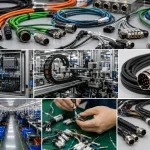
An OEM engineer designs a compact machine, medical device, robot controller, EV accessory, industrial sensor module, or control cabinet. The first prototype works on the bench, so procurement sends a rough drawing to several suppliers and chooses the lowest quote. During pilot assembly, one branch is too short, a connector latch interferes with the housing, the harness is too stiff to route, labels are missing, crimp pull force varies, and the supplier cannot provide reliable test records.
This is why buying a Custom Wire Harness requires engineering and procurement alignment from the start. A professional Custom Wire Harness manufacturer should not only build wires from a drawing; it should help convert electrical requirements, routing constraints, material choices, connector systems, quality tests, and packaging needs into a repeatable OEM production assembly.
The most expensive harness problem is rarely the wire itself. It is the production delay, rework, field failure, wrong connector substitution, unclear revision, missing compliance document, or assembly-line downtime caused by incomplete sourcing control. Before buyers approve pricing, they should define application environment, voltage, current, wire type, pinout, branch length, sleeve, label, test requirement, packaging, and traceability. For project review, buyers can contact a Custom Wire Harness supplier with drawings, samples, connector part numbers, current load, environmental conditions, and target production volume.
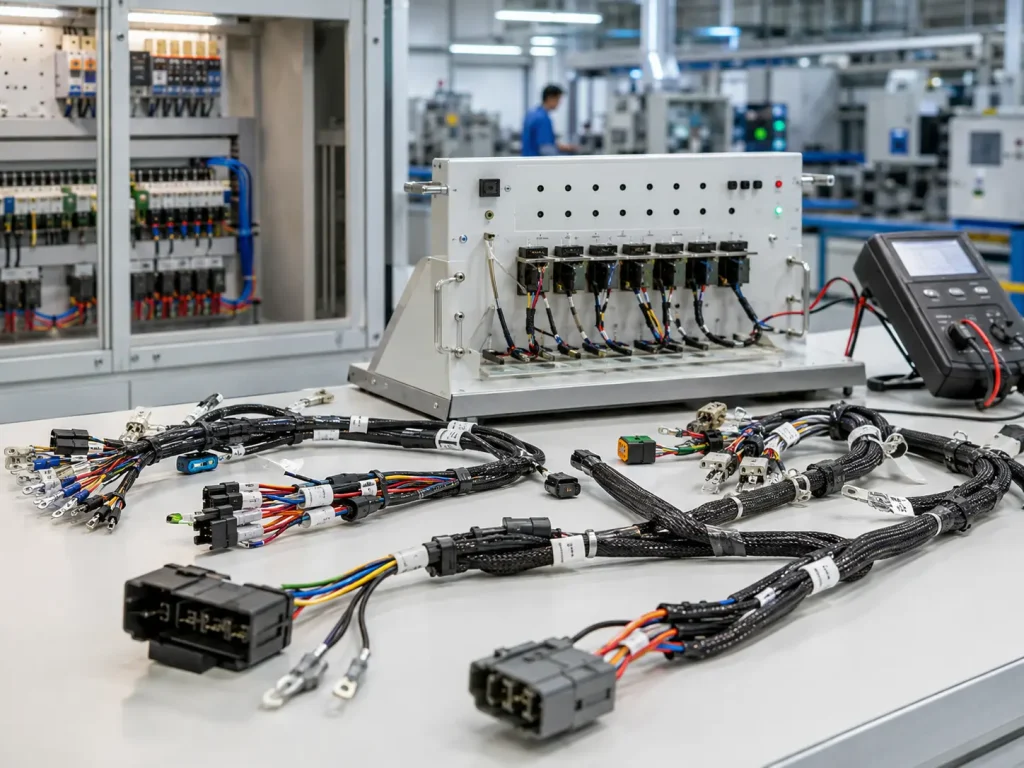
Quick Summary: Custom Wire Harness Buying Checklist
A successful custom harness order starts with a complete engineering package and ends with stable production control. Engineers usually focus on electrical function, routing, materials, fit, and validation. Procurement usually focuses on price, lead time, MOQ, supplier capacity, documentation, and risk. Both sides must work from the same controlled information.
| Buying Stage | Engineer Must Confirm | Procurement Must Confirm | Risk if Missed |
|---|---|---|---|
| Application definition | Voltage, current, environment, routing | Target market and volume | Wrong material selection |
| Drawing and BOM | Wire gauge, length, connectors, pinout | Revision control | Supplier builds wrong version |
| Prototype sample | Fit, routing, electrical test | Sample lead time and cost | Pilot build delay |
| Quality standard | Crimp, pull force, continuity, hi-pot | Inspection records | Hidden defects |
| Compliance | RoHS, REACH, UL cable where needed | Document availability | Export or customer rejection |
| Production planning | Fixture, labeling, packaging | MOQ, lead time, capacity | Late delivery |
What Is a Custom Wire Harness in OEM Manufacturing?
More Than a Bundle of Wires
A Custom Wire Harness organizes wires, cables, connectors, terminals, seals, sleeves, labels, clips, grommets, relays, fuses, shields, heat shrink, strain reliefs, and protective components into a controlled assembly for a specific product. It routes power, signals, data, sensor feedback, or control circuits inside the OEM device.
Custom harnesses are used in industrial machinery, robotics, medical devices, EV battery systems, automotive components, control cabinets, energy storage systems, solar equipment, appliances, LED lighting, agricultural machinery, marine equipment, automation modules, test instruments, and consumer electronics. Each product may require different wire materials, connector systems, test methods, documentation, and packaging.
Why OEMs Need Custom Wire Harnesses
Off-the-shelf cables may not match routing length, pinout, connector orientation, voltage, current, sealing, shielding, labeling, mounting space, assembly sequence, packaging, or testing requirements. A custom harness improves product assembly because operators can plug in pre-routed, labeled, tested, and protected wiring instead of building loose wires inside the equipment.
For OEM teams, the value is practical: cleaner internal wiring, fewer assembly mistakes, faster installation, better serviceability, improved reliability, controlled branding, stronger documentation, and lower field-failure risk. A good harness reduces chaos inside the product.
Step 1: Define the Application Environment Before Asking for Price
Electrical Load and Signal Type
Before requesting a quote, engineering should define voltage, continuous current, peak current, AC/DC type, signal type, power circuits, sensor lines, data cables, communication signals, voltage drop limits, shielding requirements, grounding method, and safety margin. Wire gauge cannot be chosen by appearance. It must match current, heat, bundle size, installation length, insulation, and terminal compatibility.
| Requirement | Why It Matters | Buyer Question |
|---|---|---|
| Current rating | Determines wire gauge and terminal size | What is the maximum continuous current? |
| Voltage rating | Determines insulation and spacing | What voltage class applies? |
| Signal type | Determines shielding and routing | Is it power, data, sensor, or control? |
| Temperature | Determines insulation and sleeve | What operating range is required? |
| Movement | Determines flex cable and strain relief | Is the harness static or dynamic? |
| Moisture | Determines sealing and IP protection | Is it exposed to water, humidity, or washdown? |
| Vibration | Determines terminal retention and locking | Is the equipment mobile or high-vibration? |
Mechanical Routing and Installation Space
A Custom Wire Harness can pass continuity testing and still fail inside the product. If a branch is too short, a connector faces the wrong direction, a cable rubs against sheet metal, or bend radius is too tight, the harness will create assembly problems. Mechanical routing should be part of the RFQ, not a later complaint.
Buyers should define overall harness length, branch lengths, breakout points, connector direction, latch access, bend radius, clip positions, grommet locations, panel pass-through areas, strain relief, service loops, sharp-edge protection, moving-part clearance, and installation sequence. For compact equipment, even 10–20 mm of missing branch length can turn a good sample into a production delay.
Step 2: Prepare a Complete Custom Wire Harness Drawing and BOM
What a Good Drawing Should Include
A strong drawing should include part number, revision number, harness layout, overall length, branch lengths, tolerances, wire colors, wire gauge, wire type, connector part numbers, terminal part numbers, pinout, circuit ID, sleeving, heat shrink, grommets, clips, labels, seals, testing requirements, packaging notes, and approval signature.
Labels should be shown by location and orientation. Connector direction should be clearly marked. Critical branch dimensions should have tolerances. If a harness must be packed without sharp bends, packaging should be included in the drawing or purchase note. The goal is to remove supplier guessing.
BOM and Approved Manufacturer List
The BOM should include connector brand and series, terminal material and plating, wire standard, insulation material, sleeve type, heat shrink ratio, label material, seal material, clip type, fuse holder, relay, and approved alternatives. Buyers should define whether substitutions are allowed.
Connector substitution is a common hidden risk. Two connectors may look similar but differ in locking force, terminal fit, plating, material, temperature rating, sealing, or mating reliability. If substitutions are allowed, approval must be written. If substitutions are forbidden, critical parts should be marked as no-substitution items.
Step 3: Select Wire Gauge Insulation and Cable Type
Wire Gauge and Current Carrying Capacity
Wire gauge affects heat, voltage drop, flexibility, weight, cost, and terminal compatibility. A larger conductor can carry more current, but it may be too stiff for tight routing. A smaller conductor may reduce cost and improve flexibility, but it may overheat or produce unacceptable voltage drop. Engineers should review AWG or mm² size, conductor material, stranding, insulation thickness, bundle derating, ambient temperature, and installation length.
| Wire Type Direction | Common Use | Buyer Risk |
|---|---|---|
| Small signal wire | Sensors, LEDs, control signals | Fragile if handled poorly |
| Medium wire | Control circuits and low-power devices | Wrong gauge may overheat |
| Larger power wire | Motors, batteries, actuators | Needs terminal and insulation match |
| Shielded cable | Data, communication, noise-sensitive circuits | Shield grounding must be defined |
| High-flex cable | Robots, drag chains, moving modules | Requires bend-cycle review |
Insulation Materials and Temperature Rating
Common insulation options include PVC, XLPE, TPE, silicone, PTFE, FEP, PUR, cross-linked polyolefin, LSZH material, and irradiated wire. PVC is cost-effective for many general applications. XLPE can support higher temperature and abrasion needs. Silicone provides heat resistance and flexibility. PTFE and FEP are used for higher temperature or chemical exposure. PUR is useful for abrasion and flex applications. LSZH materials may be required in specific indoor or transportation environments.
Insulation should be chosen by actual operating conditions, not by price alone. A harness near a motor, heater, battery module, moving joint, hydraulic system, or cleaning chemical may need a more durable wire than a static low-voltage signal cable.
Step 4: Choose Connectors Terminals Seals and Protection
Connector Selection
Connector selection affects electrical performance, installation speed, sealing, serviceability, and long-term reliability. Buyers should check current rating, voltage rating, pin count, pitch, locking mechanism, polarization, sealing level, mating cycles, temperature rating, tooling requirement, availability, lead time, and original-versus-equivalent policy.
In high-vibration equipment, connector locking and terminal retention are essential. In waterproof systems, seals must match wire diameter and environmental exposure. In compact products, connector direction and latch access can decide whether operators can install the harness quickly. The best connector is not always the cheapest or smallest one. It is the one that survives the application and remains available for production.
Terminal and Crimp Quality
Crimp quality is one of the most important hidden factors in Custom Wire Harness manufacturing. A weak crimp may pass basic continuity testing but fail under pull stress, vibration, heat cycling, or repeated installation. Key factors include wire strip length, crimp height, crimp width, conductor brush, insulation support, pull force, crimp cross-section, terminal plating, applicator condition, tool calibration, and operator training.
For OEM production, crimping should be controlled with validated tooling, documented work instructions, pull force checks, crimp height monitoring, and inspection records. A supplier that cannot explain its crimp process may not be ready for critical industrial, medical, automotive, robotics, or EV projects.
Protection Components
Protective parts may include braided sleeve, corrugated tube, PVC tube, spiral wrap, heat shrink, cloth tape, grommets, boots, strain reliefs, tie wraps, clips, adhesive labels, and protective covers. Selection depends on abrasion, heat, oil, chemicals, water, vibration, movement, installation method, and serviceability.
A harness routed through a metal panel may need a grommet. A harness close to moving parts may need abrasion-resistant sleeving and secure clips. A robotics harness may need high-flex cable and strain relief. Protection is not decoration. It is reliability insurance.
Step 5: Define Testing and Quality Requirements
Electrical Testing
Common electrical tests include continuity, open circuit, short circuit, miswire, hi-pot, dielectric withstand, insulation resistance, contact resistance, voltage drop, and functional testing. Simple low-voltage harnesses may need continuity and visual inspection. Power harnesses may need voltage drop or insulation checks. Medical, EV, industrial, and safety-related harnesses may need stronger testing and documented records.
| Test Type | Purpose | Common Use | Risk if Missing |
|---|---|---|---|
| Continuity | Confirms circuit path | All harnesses | Open circuit or broken connection |
| Miswire test | Prevents wrong pinout | Multi-connector harnesses | Device malfunction |
| Hi-pot | Checks insulation withstand | Higher voltage applications | Insulation failure |
| Pull force | Confirms crimp strength | Crimped terminals | Terminal pull-out |
| Crimp height | Controls repeatability | Production QC | Unstable crimp process |
| Functional test | Simulates device behavior | OEM-specific assemblies | Field failure after assembly |
Mechanical and Workmanship Testing
Mechanical testing may include pull force, crimp height, crimp cross-section, terminal retention, connector latch check, insertion and extraction force, bend testing, vibration testing where needed, label adhesion, sleeve position, and dimensional inspection. These checks confirm that the harness can survive handling, installation, and real operating conditions.
IPC/WHMA-A-620 is widely used as an acceptance reference for cable and wire harness assemblies. Buyers should state workmanship requirements clearly when needed, including crimp acceptability, soldering requirements, insulation damage limits, lacing, tying, sleeve placement, cleanliness, labeling, and inspection class where applicable.
Step 6: Understand Standards Compliance and Documentation
IPC/WHMA-A-620 for Custom Wire Harness Assemblies
IPC/WHMA-A-620 helps define acceptance expectations for cable and harness workmanship, but it does not replace engineering drawings. The drawing still needs exact wire lengths, connector part numbers, pinout, labels, tolerances, sleeve positions, packaging, and testing requirements.
Do not assume a supplier follows a standard unless it is written into the drawing, purchase specification, or quality agreement. Buyers should ask how operators are trained, how inspectors are qualified, how records are kept, and how defects are handled.
UL RoHS REACH and Market Requirements
Depending on the end product and market, buyers may request UL cable information, UL traceability, RoHS declarations, REACH declarations, material certificates, certificates of conformity, inspection records, test reports, FAI reports, PPAP documents for automotive programs, IMDS material reporting, or customer-specific compliance files.
Different industries require different documentation. Automotive, medical, EV, railway, marine, appliance, and industrial equipment projects should list compliance documents early in the RFQ. Waiting until shipment to ask for documents can delay delivery or create customer rejection.
Step 7: Prototype Sampling and Engineering Validation
First Article Inspection
First Article Inspection should verify dimensions, wire length, branch length, connector orientation, pinout, wire color, label position, sleeve position, crimp quality, continuity, packaging, and drawing revision. FAI protects the buyer from repeating one prototype mistake across hundreds or thousands of harnesses.
Procurement should not push mass production before engineering approves the first article. A rushed sample approval can turn a small dimensional issue into an expensive production stop.
Fit and Routing Validation
The sample should be installed inside the actual product. Check whether each branch reaches correctly, whether there is enough service loop, whether connectors are easy to mate, whether labels remain visible, whether the harness rubs against sharp edges, whether it touches moving parts, whether bend radius is acceptable, and whether operators can install it quickly.
Bench testing proves electrical continuity. Product installation proves manufacturability. Both are needed.
Pilot Run Before Mass Production
A pilot run verifies fixture reliability, operator training, cycle time, test fixture function, packaging method, batch records, defect rate, engineering change control, and supplier repeatability. The pilot stage should reveal whether the supplier can repeat the approved sample under production conditions.
Step 8: Procurement Cost Analysis Beyond Unit Price
Hidden Costs in Custom Wire Harness Sourcing
Custom Wire Harness cost includes tooling, crimp applicators, connector MOQ, wire MOQ, sample revisions, freight, expedite fees, inspection, rework, downtime, field failure, inventory, obsolescence, custom packaging, documentation, and engineering change delays. The lowest quote may be expensive if quality control is weak.
| Cost Item | Low-Price Supplier Risk | Better Buying Question |
|---|---|---|
| Connector sourcing | Uses uncontrolled alternatives | Are original or approved parts used? |
| Crimp quality | Rework and field failure | Is pull force and crimp height controlled? |
| Testing | Hidden wiring defects | Is 100% electrical testing provided? |
| Lead time | Production delays | What parts have long lead times? |
| Packaging | Damage or mixed batches | How are harnesses labeled and packed? |
| Documentation | Customer rejection | Can required reports be provided? |
MOQ and Lead Time Planning
Procurement should ask about sample lead time, pilot lead time, mass production lead time, MOQ, monthly capacity, connector stock, wire stock, tooling lead time, safety stock, forecast support, and alternative part approval. Many delays are caused by connectors and terminals, not assembly labor.
For stable OEM production, the buyer and supplier should review forecast, critical components, stock strategy, approved alternatives, and engineering change impact before the first mass order.
Step 9: Supplier Audit and Factory Capability
What to Look for in a Custom Wire Harness Factory
A capable Custom Wire Harness factory should have incoming material inspection, wire cutting machines, stripping machines, crimping machines, applicator management, pull force testers, continuity testers, hi-pot testers where needed, harness boards, work instructions, labeling systems, traceability, QC records, operator training, packaging areas, nonconformance control, ESD control where needed, and clean assembly areas for sensitive projects.
For high-volume production, buyers should also evaluate fixture control, defect tracking, capacity planning, packaging consistency, inspection discipline, and communication speed. A clean quotation is not enough. The factory process must be able to repeat the approved sample.
Supplier Communication and Engineering Support
A good supplier should ask about application, current, voltage, environment, connector brand, drawing revision, test requirements, quality standard, required documents, monthly demand, packaging method, and critical dimensions. If a supplier only asks for quantity and target price, it may not understand the engineering risk.
Step 10: Engineering Change Control and Long-Term Supply
Revision Control
Every drawing should have a revision number. Every change should be documented. Old inventory should be controlled. The supplier should not change materials without approval. Labels may need revision marking. The ECO process should define price impact, lead time impact, old-stock handling, and effective date.
Traceability and Batch Control
Traceability may cover wire lot, connector lot, terminal lot, operator, machine, crimp tool, inspection result, test record, packing lot, shipment batch, and production date. Traceability is especially valuable when defects appear, customer audits occur, or regulated industries require documentation.
Long-Term Supply Strategy
OEM buyers should ask whether the supplier can store tooling, support repeat orders, manage end-of-life parts, scale production, support spare parts, build service harnesses, respond to engineering changes, and provide lifecycle support. A good supplier should support the product, not just the first purchase order.
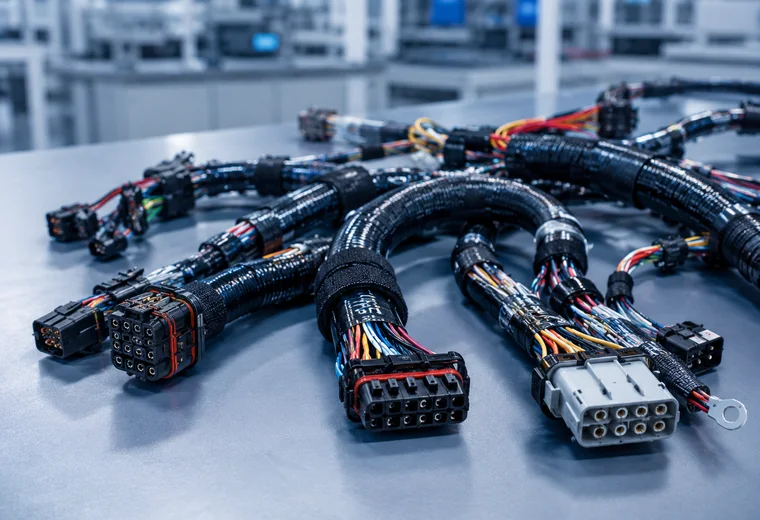
Comparison: In-House Assembly vs Outsourced Custom Wire Harness Supplier
Some OEMs build harnesses in-house during early development because it gives engineering fast control. But in-house assembly can become inconsistent and labor-intensive as the product moves into production. Outsourcing to a specialized supplier can improve process control, test coverage, documentation, and scalability when the RFQ package is complete.
| Option | Advantage | Limitation | Best Fit |
|---|---|---|---|
| In-house assembly | Direct engineering control | Labor-intensive and inconsistent at scale | Prototype or very low volume |
| Local supplier | Fast communication | Higher cost | High-touch engineering projects |
| Overseas supplier | Cost-effective and scalable | Requires stronger documentation | Stable OEM production |
| Specialized Custom Wire Harness factory | Process control and testing | Needs clear RFQ package | Repeatable custom harness production |
Common Buyer Mistakes
Mistake 1: Sending Only Photos Instead of Drawings
Photos can support understanding, but they cannot replace controlled drawings, BOM, pinout, connector orientation, dimensions, tolerances, and test requirements. When the supplier guesses, the buyer inherits the risk.
Mistake 2: Choosing by Lowest Unit Price
A low quote may hide weak crimp control, uncontrolled substitutions, missing test records, poor packaging, and late delivery. Compare total cost of quality, not only unit price.
Mistake 3: Ignoring Connector Lead Time
Connectors and terminals can stop production if they are unavailable. Forecast critical parts and approve alternatives early.
Mistake 4: Skipping First Article Inspection
Bulk production can repeat prototype mistakes if the first article is not checked carefully. FAI is a risk-control step, not paperwork decoration.
Mistake 5: No Revision Control
Without revision control, a factory may ship old versions, mixed batches, or unauthorized material changes. Use controlled drawings and a formal ECO process.
Buyer RFQ Checklist for Custom Wire Harness
| RFQ Item | Why It Matters | Buyer Requirement |
|---|---|---|
| Application | Defines design risk | Machine, medical device, robotics, EV, appliance, control cabinet, or other OEM product |
| Voltage and current | Controls wire and terminal selection | Provide continuous and peak values |
| Drawing and BOM | Prevents guessing | Include revision, length, pinout, connectors, terminals, labels, and tolerances |
| Environment | Controls protection | Temperature, vibration, moisture, oil, chemical, or movement exposure |
| Testing | Prevents hidden defects | Continuity, miswire, hi-pot, pull force, functional testing if required |
| Compliance | Supports market approval | RoHS, REACH, UL cable, IPC/WHMA-A-620, FAI, PPAP, or customer-specific documents |
| Packaging | Protects harnesses during transport | Define labels, bags, cartons, bending limits, and batch separation |
Questions to Ask a Custom Wire Harness Supplier
Buyers should ask whether the supplier can manufacture according to drawing and BOM, support prototype, pilot, and mass production, provide 100% continuity testing, provide hi-pot testing when needed, follow IPC/WHMA-A-620 workmanship criteria when specified, provide crimp pull force records, control connector substitutions, provide RoHS and REACH declarations, support UL cable or traceable materials, provide FAI reports, manage revision changes, support custom labels and packaging, and handle nonconforming products properly.
The supplier should also explain MOQ, sample lead time, production lead time, monthly capacity, connector sourcing risk, approved alternatives, test fixture design, packaging method, and response process for engineering changes.
Industry Trends in Custom Wire Harness Sourcing
More Low-Volume High-Mix OEM Projects
Robotics, medical devices, automation equipment, test instruments, and customized machinery often require flexible custom batches. Suppliers need to handle multiple part numbers, fast samples, frequent revisions, and detailed documentation.
More Traceability Requirements
Customers increasingly request material lot control, inspection reports, test records, and revision tracking. Traceability supports audits, failure analysis, and repeat production.
More EV Battery and Energy Storage Harness Demand
EV accessories and energy storage systems create higher expectations for current rating, voltage rating, insulation, creepage and clearance awareness, hi-pot testing, thermal behavior, and connector security.
More Shielded Data and Sensor Harnesses
Industrial IoT, cameras, sensors, and communication modules require EMI control and signal integrity. Shield grounding, routing separation, connector selection, and cable structure must be defined by engineering.
More Procurement Teams Want Engineering Support
Suppliers are expected to review manufacturability, connector risk, testing needs, packaging, compliance documents, and lead time risks. A useful supplier prevents problems before they become production delays.
Final Recommendation: Buy the Process, Not Just the Harness
A Custom Wire Harness should be purchased as an engineered production assembly, not as a simple bundle of wires. Engineering should define application, current, voltage, wire gauge, insulation, connectors, routing, protection, testing, and validation. Procurement should evaluate MOQ, lead time, supplier process, documentation, traceability, communication, and total cost of quality.
Before requesting a Custom Wire Harness quote, prepare your drawing, BOM, application, voltage/current, environment, wire gauge, connector part numbers, pinout, sleeve and label requirements, testing requirements, compliance documents, quantity, packaging, and forecast. A professional custom cable assembly manufacturer can help turn engineering requirements into a repeatable OEM production assembly.
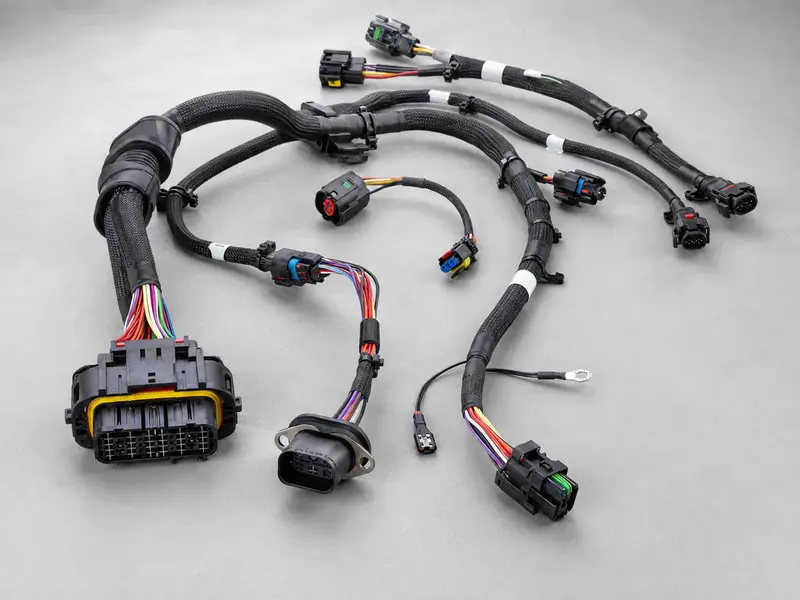
Frequently Asked Questions About Custom Wire Harness Buying
1. What information do I need to request a Custom Wire Harness quote?
To request a Custom Wire Harness quote, buyers should provide a drawing, BOM, wire gauge, wire type, length, branch lengths, connector part numbers, terminal part numbers, pinout, application, voltage, current, signal type, operating temperature, environmental exposure, sleeve and label requirements, testing requirements, quantity, compliance needs, packaging details, and production forecast. If the drawing is not complete, sending a physical sample, photos, and installation notes can help, but the final production approval should still be based on a controlled drawing and revision.
2. How do I choose a Custom Wire Harness manufacturer?
Choose a Custom Wire Harness manufacturer with engineering support, crimping process control, electrical testing capability, traceability, documentation control, revision management, trained operators, stable production capacity, and experience with your industry. A strong supplier should ask about your application, current, voltage, connectors, routing, environment, test requirements, compliance documents, and monthly demand before quoting. Avoid suppliers that only quote by wire length and connector count without discussing installation, testing, and quality risk.
3. What tests should a Custom Wire Harness pass?
Common Custom Wire Harness tests include continuity, open circuit, short circuit, miswire, pull force, crimp height, terminal retention, connector latch check, hi-pot testing, insulation resistance, contact resistance, voltage drop, and functional testing depending on the application. Simple low-voltage harnesses may need continuity and visual inspection, while higher-voltage, industrial, medical, EV, or safety-related harnesses may require stricter electrical and mechanical testing. Buyers should define test requirements on the drawing or purchase specification before production.
4. What standards apply to custom wire harness assemblies?
IPC/WHMA-A-620 is widely used as an acceptance reference for cable and wire harness assemblies. Depending on the end product and market, buyers may also request UL cable information, UL traceability, RoHS declarations, REACH declarations, material certificates, FAI reports, inspection records, PPAP documents for automotive programs, or customer-specific workmanship requirements. Standards and documents should be listed clearly in the RFQ, drawing, or purchase agreement because requirements differ by industry and product risk level.
5. Why do Custom Wire Harness quotes vary between suppliers?
Custom Wire Harness quotes can vary because suppliers may use different connector brands, terminal materials, wire types, insulation grades, testing levels, tooling assumptions, labor processes, MOQ rules, documentation support, compliance declarations, packaging methods, and lead time calculations. A lower quote may exclude pull force records, hi-pot testing, traceability, custom labels, approved connector brands, or proper packaging. Buyers should compare total cost of quality, not only the piece price shown on the quotation.
References
- IPC/WHMA-A-620 Requirements and Acceptance for Cable and Wire Harness Assemblies, Author: IPC and WHMA Technical Committee, Institution: IPC International and WHMA, Source: Cable and Wire Harness Assembly Standard.
- Wiring Harness Traceability Program, Author: UL Solutions Technical Team, Institution: UL Solutions, Source: Wire Harness Traceability and Cable Sourcing Resource.
- RoHS Directive 2011/65/EU, Author: European Commission, Institution: European Commission, Source: EU Electrical and Electronic Equipment Hazardous Substance Regulation.
- REACH Regulation Overview, Author: European Commission and ECHA Contributors, Institution: European Commission, Source: EU Chemicals Regulation Resource.
- Electrical Wiring Industrial Machinery Requirements, Author: NFPA Technical Committee Contributors, Institution: National Fire Protection Association, Source: Electrical Safety Reference.
- Automotive Wiring Harness Manufacturing and Quality Control, Author: Industry Engineering Contributors, Institution: SAE International, Source: Automotive Electrical Systems Reference.
- Wire and Cable Insulation Materials for Industrial Applications, Author: Technical Engineering Contributors, Institution: UL and Cable Industry Publications, Source: Wire and Cable Materials Reference.
- Quality Management Systems Requirements for Production Organizations, Author: ISO Technical Committee Contributors, Institution: International Organization for Standardization, Source: Quality Management Reference.
How OEM Teams Should Buy a Custom Wire Harness
How should OEM engineers start a Custom Wire Harness project?
OEM engineers should start by defining the application, voltage, current, signal type, operating temperature, vibration, moisture exposure, routing space, bend radius, connector system, and test requirements. The supplier can only recommend the right materials when the real use environment is clear.
Why does procurement need more than a unit price?
Unit price does not show the full cost of custom harness sourcing. Hidden costs can come from wrong connector substitutions, weak crimp control, missing test records, late lead times, poor packaging, rework, field failure, and engineering change confusion.
What option works best for prototype projects?
For prototypes, buyers should prioritize engineering feedback, fast samples, drawing correction, fit validation, and first article review. The goal is to discover routing and assembly problems before mass production.
What option works best for mass production?
For mass production, buyers should prioritize stable tooling, 100% electrical testing where required, crimp process control, trained operators, documented work instructions, batch traceability, packaging consistency, and revision control.
Consideration: What creates the highest failure risk?
The highest risks usually come from incomplete drawings, uncontrolled connector substitutions, poor crimp quality, weak test coverage, unclear revisions, tight routing, insufficient strain relief, wrong insulation material, and missing compliance documents.
Recommendation
Select a supplier that can support engineering review, prototype validation, pilot production, quality testing, documentation, and long-term repeat supply. The best Custom Wire Harness supplier should reduce assembly risk, not only reduce piece price.
Before ordering custom wire harnesses, send your supplier the drawing, BOM, connector part numbers, wire gauge, pinout, routing environment, voltage/current data, test requirements, compliance needs, packaging method, and production forecast. A professional Custom Wire Harness supplier can help build a practical RFQ and validation plan.