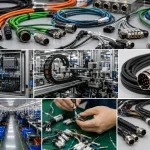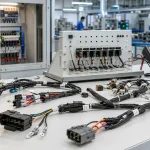
A Medical Wire Harness is not just a bundle of wires inside a device; it is the electrical nervous system that helps diagnostic and treatment equipment operate accurately, safely, and consistently. In patient monitors, ultrasound systems, ventilators, infusion pumps, dental devices, surgical tools, rehabilitation equipment, and laboratory diagnostic instruments, the harness controls how power, data, sensor feedback, alarms, grounding, and safety interlocks move through the system.
For medical device manufacturers, a weak harness design can create intermittent signals, inaccurate readings, poor imaging quality, alarm failure, connector looseness, overheating, motor malfunction, failed EMC testing, or field service complaints. Unlike many general industrial harnesses, a medical Wire Harness must be designed with device safety, patient environment, signal quality, cleaning exposure, repeated handling, traceability, and documentation in mind.
Buyers evaluating a Medical Wire Harness manufacturer should look beyond basic cable assembly capability. The supplier should understand medical equipment routing, connector selection, crimp quality, shielding, labeling, test records, revision control, and small-batch-to-mass-production consistency.
What Is a Medical Wire Harness?
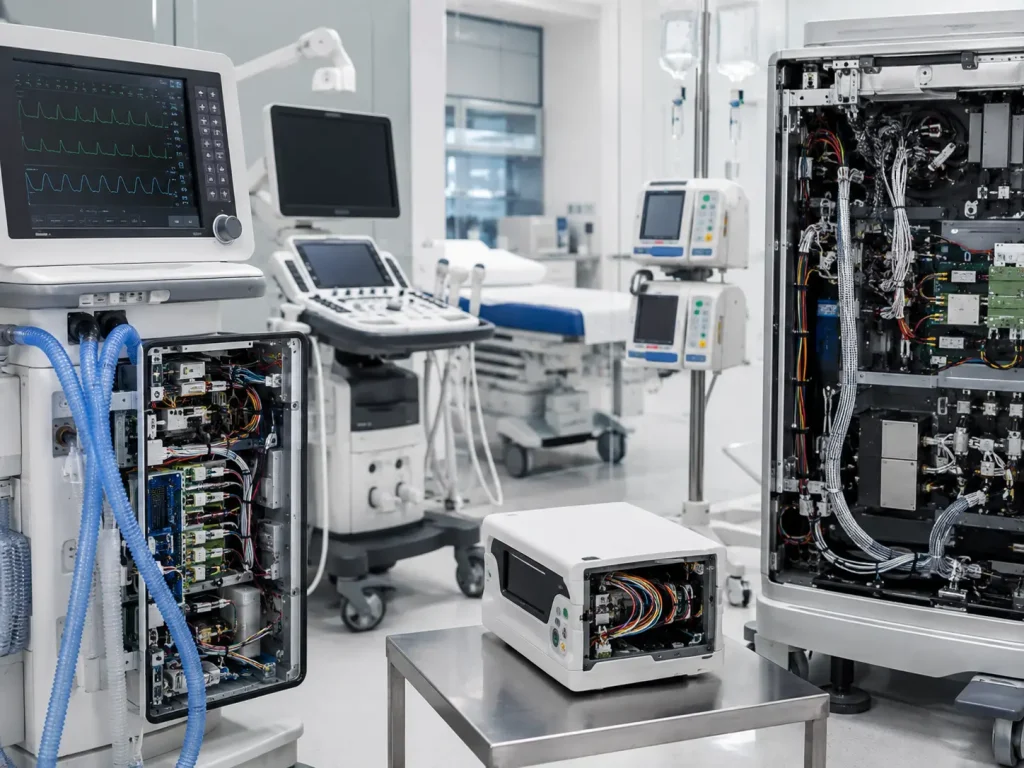
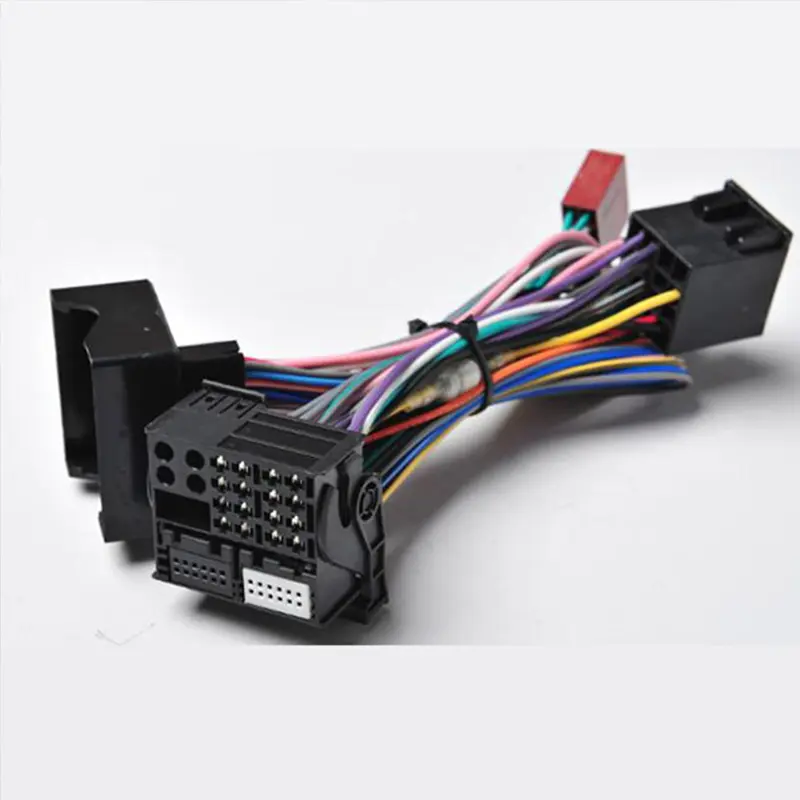
A Medical Wire Harness is an organized assembly of wires, cables, connectors, terminals, sleeves, labels, shields, tubing, tie points, strain relief components, and protective coverings used inside or around medical equipment. It can transmit power, low-voltage control signals, sensor signals, high-frequency data, motor control signals, grounding paths, communication signals, and safety interlock signals.
Diagnostic equipment often uses harnesses for sensitive signal transmission. Examples include ECG devices, patient monitors, ultrasound systems, blood analyzers, endoscopy systems, laboratory diagnostic instruments, and imaging equipment. Treatment equipment often uses harnesses for power delivery, actuator control, alarms, pumps, valves, heaters, sensors, and safety feedback. Examples include ventilators, infusion pumps, surgical instruments, dental equipment, rehabilitation devices, physiotherapy machines, laser treatment systems, patient beds, and mobility systems.
The key difference between a medical harness and a general-purpose harness is risk level. Medical systems may operate near patients, hospitals, wireless devices, motors, power supplies, fluids, disinfectants, and sensitive electronics. As a result, the design must consider low noise, controlled grounding, leakage risk, EMC behavior, cleaning resistance, connector safety, routing repeatability, and production documentation.
| Wire Harness Function | Medical Device Example | Design Concern |
|---|---|---|
| Power transmission | Infusion pump, ventilator | Current rating and voltage drop |
| Signal transmission | ECG, sensors, ultrasound | Noise control and shielding |
| Data communication | Imaging equipment, monitors | Impedance and EMI control |
| Motor control | Patient beds, pumps | Flexing and load stability |
| Grounding | Diagnostic systems | Leakage and EMC control |
| Safety interlock | Treatment devices | Fail-safe signal reliability |
Diagnostic Equipment Wire Harness Design Requirements
Low-Noise Signal Transmission
Diagnostic devices often collect small physiological signals or sensor outputs. ECG systems, patient monitors, ultrasound modules, blood analyzers, imaging systems, and endoscopy equipment may all depend on stable low-noise transmission. If the harness is routed poorly or lacks proper shielding, the device may experience signal drift, measurement noise, crosstalk, unstable readings, or poor image clarity.
Design teams should separate sensitive signal lines from power conductors, motor lines, switching power supplies, and high-current circuits. Twisted pairs, shielded twisted pairs, coaxial cables, foil shields, braided shields, and drain wires may be used depending on signal type. Cable length should be controlled because long harnesses can increase capacitance, impedance mismatch, and noise pickup.
Shielding and Grounding Strategy
Shielding is useful only when the grounding strategy is correct. A shield connected incorrectly may create a ground loop or fail to control interference. Some systems require single-point grounding, while others may require chassis grounding, multi-point grounding, or defined shield termination at connectors. The harness design must match the overall electrical architecture of the device.
Real Diagnostic Scenarios
In an ECG cable assembly, low-level bioelectric signals may require shielding, low-noise cable materials, and stable connector contact resistance. In an ultrasound system, high-frequency signal paths may require impedance control and careful cable routing. In a blood analyzer, multiple sensors and actuators require labeling, routing separation, and serviceable branch design. In imaging equipment, harnesses must manage data density, EMC exposure, and internal layout constraints.
| Diagnostic Equipment | Signal Challenge | Wire Harness Design Focus |
|---|---|---|
| ECG device | Microvolt-level signal sensitivity | Shielding and low noise |
| Patient monitor | Multiple sensor inputs | Routing and connector reliability |
| Ultrasound system | High-frequency signals | Impedance and shielding control |
| Blood analyzer | Sensor and actuator coordination | Labeling and serviceability |
| Imaging equipment | Data and power density | EMI management |
| Endoscopy device | Compact routing | Flexibility and miniaturization |
Treatment Equipment Wire Harness Design Requirements
Stable Power Delivery
Treatment equipment may drive motors, pumps, heaters, fans, lamps, valves, actuators, compressors, displays, batteries, and control boards. Wire gauge, current rating, connector derating, voltage drop, insulation temperature rating, and routing distance must be calculated early. An undersized conductor may increase heat, reduce voltage at the load, or shorten component life.
For example, an infusion pump harness may need stable motor control and sensor feedback. A ventilator harness may support continuous power, alarms, pressure sensors, flow sensors, and control loops. A dental device cable may face repeated movement, cleaning, and handpiece handling. A rehabilitation device may require motor current, actuator control, and bend protection across moving joints.
Safety-Critical Control Signals
Treatment equipment may include emergency stop signals, door interlocks, pressure feedback, temperature sensing, overcurrent protection, flow detection, alarm circuits, and user interface commands. If a safety signal becomes intermittent due to a weak crimp, loose connector, poor strain relief, or broken conductor, the device may fail during clinical use. Medical harness design must therefore treat signal stability and mechanical durability as safety-related issues, not only assembly details.
Repeated Bending and Movement
Many treatment systems have moving doors, arms, beds, handheld probes, portable modules, pump heads, or cable exits. These areas require flexible conductor stranding, strain relief, abrasion protection, proper bend radius, and jacket materials that can resist cracking. A stiff cable placed in a moving zone may pass initial inspection but fail after repeated bending.
| Treatment Equipment | Mechanical/Electrical Stress | Harness Requirement |
|---|---|---|
| Ventilator | Continuous operation and alarms | Stable power and signal reliability |
| Infusion pump | Motor and sensor feedback | Flex resistance and traceability |
| Surgical device | Cleaning and movement | Sealed connectors and jacket durability |
| Dental equipment | Repeated handling | Flexible cable and strain relief |
| Rehabilitation device | Motors and actuators | Current rating and routing control |
| Patient bed | Moving sections | Bend radius and abrasion protection |
Wire and Cable Material Selection for Medical Equipment
Conductor Material
Common conductor choices include bare copper, tinned copper, and silver-plated copper for selected high-performance applications. Copper is widely used because of its conductivity and processing reliability. Tinned copper can improve corrosion resistance and solderability. Silver-plated copper may be used where high-frequency or high-temperature performance is required, but cost must be justified by the application.
Conductor stranding affects flexibility. Fine-stranded conductors are better for moving cables, handheld devices, and patient-side assemblies. Larger single or coarse strands may be suitable for fixed internal routing but are less ideal for repeated bending. Wire size should be selected according to current, voltage drop, temperature rise, mechanical flexibility, and available space.
Insulation and Jacket Materials
Common insulation and jacket options include PVC, XLPE, FEP, PTFE, TPE, TPU, and silicone. PVC is cost-effective and widely used in controlled internal applications, but buyers should check plasticizer, flame rating, and compliance requirements. TPU offers abrasion resistance and flexibility, making it useful for external cables and moving assemblies. Silicone is soft, flexible, and temperature-resistant, making it suitable for patient-side or flexible medical cables when cost allows.
FEP and PTFE offer chemical and temperature resistance, but they are more difficult to process and may cost more. TPE can offer flexibility and comfort for handheld device cables, but aging and cleaning resistance should be verified. Material selection should consider biocompatibility needs, cleaning chemicals, sterilization exposure, flame retardancy, odor, color coding, flexibility, and environmental compliance.
| Material | Typical Strength | Medical Harness Use | Buyer Note |
|---|---|---|---|
| PVC | Cost-effective and easy processing | Internal wiring, low-flex areas | Check plasticizer and compliance |
| TPU | Abrasion resistance and flexibility | External cables, moving parts | Good for repeated handling |
| Silicone | Soft, flexible, temperature-resistant | Patient-side cables, flexible assemblies | Higher cost |
| FEP/PTFE | Chemical and heat resistance | High-reliability or sterilization exposure | Difficult processing |
| TPE | Flexibility and comfort | Handheld device cables | Check aging and cleaning resistance |
| XLPE | Electrical and thermal stability | Internal power lines | Less soft than elastomers |
Connector Selection for Medical Wire Harnesses
Connectors are one of the most common failure points in a Wire Harness. A connector may look acceptable in a drawing but fail in real use if mating cycle rating, locking method, pin density, plating, contact resistance, sealing, keying, or strain relief is not suitable. Medical equipment may need board-to-wire connectors, circular connectors, waterproof connectors, push-pull connectors, IDC connectors, crimp terminals, micro connectors, or high-density connectors.
Patient-side connectors may need safe identification, smooth handling, cleaning resistance, tactile reliability, and secure orientation. Service-side connectors may prioritize repairability, clear labeling, and assembly efficiency. For portable and frequently connected equipment, mating cycle rating is critical. For compact diagnostic equipment, pin density and assembly difficulty must be reviewed together.
| Connector Factor | Why It Matters | Buyer Check |
|---|---|---|
| Mating cycle rating | Repeated plugging | Match expected use |
| Contact resistance | Signal stability | Request electrical data |
| Locking structure | Prevents accidental unplugging | Choose latch, screw, or push-pull |
| Pin density | Compact device design | Check assembly difficulty |
| Plating | Corrosion and signal integrity | Review gold or tin selection |
| Keying/polarization | Prevents misconnection | Reduce use error |
| IP sealing | Liquid exposure | Check cleaning conditions |
Shielding, Grounding, and EMC Control
Medical equipment may operate near wireless devices, switching power supplies, motors, monitors, imaging systems, chargers, carts, and hospital infrastructure. A harness can behave like an antenna if cable length, routing, shielding, and grounding are poorly designed. EMC issues are often discovered late during system testing, but many of them begin at the harness design stage.
Shielding options include foil shield, braided shield, spiral shield, combination shield, shielded twisted pair, and coaxial cable. Foil shields can offer strong coverage and compact size, while braided shields improve flexibility and mechanical durability. Shielded twisted pairs help with differential signals, while coaxial designs support selected high-frequency signal paths.
Routing is equally important. Sensitive signal lines should not be bundled tightly with high-current motor lines. Harness loops should be avoided where possible. Differential pairs should maintain controlled twist and spacing. Shield termination should be defined clearly in the drawing instead of left to assembly interpretation.
| EMC Issue | Harness Cause | Design Control |
|---|---|---|
| Signal noise | Unshielded sensor lines | Shielded twisted pair |
| Crosstalk | Power and signal bundled together | Separation and routing |
| Ground loop | Incorrect shield termination | Grounding design review |
| Radiated emission | Long unfiltered harness | Shielding and ferrites |
| Immunity failure | Poor cable layout | Controlled routing |
| Data instability | Impedance mismatch | Cable and connector matching |
Biocompatibility, Cleaning, and Sterilization Considerations
Not every Medical Wire Harness requires the same material review. Internal harnesses that never contact users may have different requirements from external patient-side cables. Patient-side assemblies may require stricter evaluation of jacket materials, odor, skin-contact safety, cleaning resistance, and labeling durability.
Hospital equipment may be cleaned with alcohol wipes, disinfectants, mild detergents, hydrogen peroxide-based cleaners, or other approved cleaning agents. Repeated cleaning can cause jacket drying, swelling, discoloration, stiffness, stickiness, cracking, or label fading if materials are not suitable. Sterilization methods such as autoclave, ethylene oxide, gamma, or plasma exposure require material-specific review; no single jacket material is suitable for every method.
| Exposure Type | Harness Risk | Design Consideration |
|---|---|---|
| Alcohol wiping | Jacket drying or print fade | Chemical-resistant jacket/marking |
| Disinfectants | Swelling or discoloration | Compatibility testing |
| Autoclave | Heat and moisture stress | Silicone/PTFE-type review |
| EtO sterilization | Residual and material compatibility | Supplier documentation |
| Gamma sterilization | Polymer embrittlement | Radiation resistance check |
| Daily handling | Strain and abrasion | Flexible jacket and relief |
Electrical and Mechanical Design Parameters Buyers Should Define
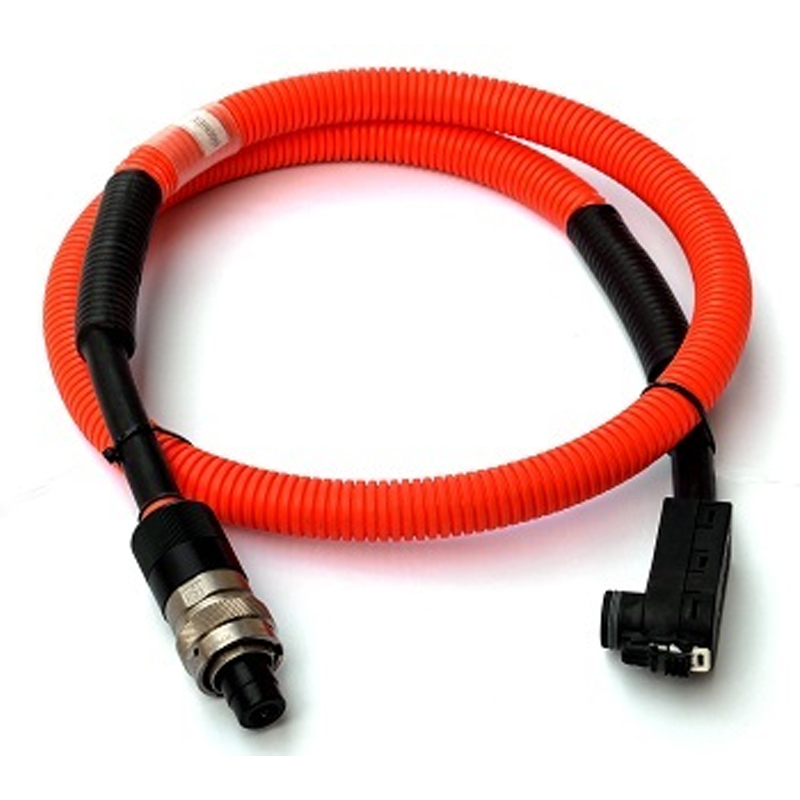
Before ordering a Medical Wire Harness, buyers should define current rating, voltage rating, wire gauge, insulation rating, connector current capacity, bend radius, flex life, pull force, branch length, routing path, shielding requirement, grounding method, label durability, and traceability level. These details help prevent design ambiguity during production.
Power lines need correct gauge and derating. Long harnesses or high-current loads may create voltage drop that affects motors, pumps, sensors, or control boards. Moving parts need flexible conductors, proper routing, abrasion protection, and strain relief. Serviceable medical devices need clear labels, revision control, and lot identification so technicians can identify the correct harness during maintenance.
Buyers can submit device type, application, voltage/current, signal type, connector requirement, cleaning exposure, movement cycle, shielding requirement, drawing, sample, and annual demand through the Medical Wire Harness design consultation page for project-based review and manufacturing support.
| Parameter | Typical Buyer Question | Risk If Ignored |
|---|---|---|
| Wire gauge | Is current rating enough? | Overheating or voltage drop |
| Insulation rating | Is voltage/temperature suitable? | Breakdown or failure |
| Shield coverage | Is EMI control needed? | Noise or test failure |
| Bend radius | Will cable move repeatedly? | Conductor breakage |
| Pull force | Can connector survive handling? | Intermittent failure |
| Contact resistance | Is signal stable? | Measurement error |
| Label durability | Can service identify harness? | Repair mistakes |
| Traceability | Can lots be tracked? | Quality investigation difficulty |
Medical Wire Harness Manufacturing Process
Design Review and DFM
The process should begin with drawing review and design-for-manufacturing discussion. The supplier should check pinout, wire length, connector type, routing, strain relief, label position, shielding method, branch tolerance, test requirements, and packaging. Early review helps identify risks before tooling, fixture building, or batch production.
Wire Cutting, Stripping, and Crimping
Precision cutting and controlled stripping help prevent routing errors and conductor damage. Crimping is one of the most critical processes in harness production. Crimp height, pull force, terminal seating, tooling condition, and calibration must be controlled. A visually acceptable crimp can still fail if compression is inconsistent or conductor strands are damaged.
Soldering, Shield Termination, and Overmolding
Some medical cable assemblies require soldering, shield bonding, heat shrink, potting, adhesive lining, or overmolding. Overmolding can improve strain relief, sealing, handling comfort, and cable exit durability. Shield termination must follow the design requirement instead of being improvised during assembly.
| Process Step | Key Control | Quality Risk |
|---|---|---|
| Drawing review | Pinout and specification | Wrong harness design |
| Wire cutting | Length tolerance | Routing failure |
| Stripping | Conductor protection | Weak crimp |
| Crimping | Crimp height and pull force | Intermittent connection |
| Shield termination | Defined ground method | EMC failure |
| Overmolding | Strain relief and sealing | Cable breakage |
| Electrical test | Continuity and hipot | Hidden defects |
| Packaging | Protection and labeling | Damage or mix-up |
Testing and Quality Verification
Medical wire harness testing should be defined according to device risk, electrical function, customer specification, and production volume. Continuity testing confirms correct circuits and pinout. Hi-pot and insulation resistance testing help check dielectric safety where required. Pull force testing verifies crimp and terminal retention. Flex and bend testing are important for moving medical cables, patient-side leads, and handheld equipment.
Environmental testing may include temperature cycling, humidity exposure, cleaning chemical exposure, vibration, aging, and repeated bending. Visual inspection should check crimping, soldering, labeling, routing, strain relief, jacket damage, shield termination, contamination, and packaging. Test records should be connected to lot traceability and revision control.
| Test | Purpose | Medical Buyer Value |
|---|---|---|
| Continuity test | Confirms correct wiring | Prevents pinout errors |
| Hi-pot test | Checks dielectric strength | Improves electrical safety |
| Insulation resistance | Detects leakage paths | Supports reliability |
| Pull force test | Verifies crimp strength | Reduces field failures |
| Flex test | Checks moving cable life | Supports portable devices |
| Shield test | Checks EMC design | Supports signal quality |
| Visual inspection | Checks workmanship | Supports acceptance |
| Environmental aging | Checks long-term exposure | Reduces service risk |
Standards, Regulations, and Documentation
Medical device supply chains often require structured quality management, controlled documentation, traceability, and change control. ISO 13485 is widely used as a quality management framework for medical device organizations and suppliers. A harness supplier may not always be the legal manufacturer of the medical device, but process control, records, lot traceability, and change notification still matter.
IPC/WHMA-A-620 is commonly used for cable and wire harness workmanship acceptance. It helps define expectations for crimping, soldering, insulation, lacing, marking, splicing, shield termination, and visual quality. IEC 60601 series requirements are usually evaluated at the medical electrical equipment system level, but harness design can influence insulation, leakage current, EMC, routing safety, and serviceability. ISO 10993 may be relevant when patient-contact materials require biological evaluation. RoHS and REACH may affect insulation, jackets, plasticizers, flame retardants, plating, and restricted substances.
| Requirement Area | What Buyers Should Request | Why It Matters |
|---|---|---|
| Quality system | ISO 13485 or quality process evidence | Traceability and control |
| Workmanship | IPC/WHMA-A-620 criteria | Assembly acceptance |
| Electrical safety | Test plan and insulation data | Risk control |
| Biocompatibility | Material data where patient contact exists | Patient safety |
| Environmental compliance | RoHS/REACH documents | Market access |
| Traceability | Lot records and revision control | Quality investigation |
| Test records | Continuity, hipot, pull force | Production verification |
| Change control | Supplier notification process | Device consistency |
Common Mistakes in Medical Wire Harness Design
The first mistake is treating medical harnesses like general industrial harnesses. This can miss documentation, material, cleaning, traceability, or safety requirements. The second mistake is ignoring EMC at the harness level, which can lead to noise, false readings, unstable data, or failed system testing. The third mistake is choosing connectors only by size while ignoring mating cycles, locking, contact resistance, keying, and service use.
The fourth mistake is underestimating cleaning and sterilization exposure. A cable jacket that looks suitable at first may crack, swell, stiffen, fade, or become sticky after repeated cleaning cycles. The fifth mistake is using no strain relief for moving cables, causing broken conductors, connector pullout, or intermittent operation. The sixth mistake is poor revision control, where an old harness version is installed into a newer device configuration.
How to Choose a Reliable Medical Wire Harness Supplier
A reliable medical harness supplier should support diagnostic and treatment equipment applications, custom cable assembly drawings, connector sourcing, shielding design, crimp process control, labeling, test records, prototype builds, and bulk production. Buyers should ask whether the supplier can provide continuity testing, hi-pot testing where required, pull force testing, insulation resistance testing, RoHS/REACH documents, clean packaging, and traceability.
The supplier should also help with DFM review. A build-only factory may assemble exactly what is drawn, even if the drawing contains routing, strain relief, or shielding risks. A stronger supplier asks questions, checks risk points, and suggests practical improvements before production. For regulated medical equipment, change control is especially important because connector substitutions, wire material changes, or label changes may affect the device file.
| Supplier Check | Good Signal | Risk Signal |
|---|---|---|
| Medical experience | Diagnostic/treatment cases | Only generic harness experience |
| Engineering support | DFM and drawing review | Build-only response |
| Quality control | Test records and traceability | No lot tracking |
| Crimp process | Calibrated tooling | Manual uncontrolled crimping |
| Shielding support | Defined termination methods | Unclear EMC practice |
| Materials knowledge | Jacket/insulation guidance | No cleaning resistance data |
| Prototype support | Sample builds available | Bulk order first |
| Documentation | RoHS/REACH/test reports | No compliance support |
If This Is Your Equipment Need, Choose This Wire Harness Strategy
If the equipment needs low-noise diagnostic signals, choose a shielded twisted pair harness and avoid unshielded mixed routing. If the equipment includes repeated cable movement, choose high-flex conductors with strain relief and avoid stiff jackets with sharp bends. If the equipment faces hospital cleaning exposure, choose chemical-resistant jacket materials and avoid unknown plasticizer systems.
If the cable is patient-side, review material safety and cleaning behavior. If the device has high-current pumps or motors, choose correct gauge and derating. If the layout is compact, choose high-density connectors and controlled routing. If EMC sensitivity is high, define shield termination and grounding early instead of applying a late-stage shielding fix.
| If Your Equipment Needs | Choose | Avoid |
|---|---|---|
| Low-noise diagnostic signals | Shielded twisted pair harness | Unshielded mixed routing |
| Repeated cable movement | High-flex conductor and strain relief | Stiff jacket with sharp bends |
| Hospital cleaning exposure | Chemical-resistant jacket | Unknown plasticizer system |
| Patient-side cable | Material safety review | Generic external cable |
| High-current pump or motor | Correct gauge and derating | Undersized wires |
| Compact device layout | High-density connector and routing control | Random wire bundling |
| EMC-sensitive equipment | Shield termination and grounding plan | Late-stage shielding fix |
| Prototype medical device | Supplier with DFM support | Price-only harness factory |
| Regulated product launch | Traceability and test records | No revision control |
| Long-term production | Supplier with capacity and change control | Unstable small workshop |
Frequently Asked Questions
1. What is a Medical Wire Harness?
A Medical Wire Harness is an organized wire and cable assembly used in medical equipment to transmit power, signals, data, control commands, grounding paths, and safety feedback. It can include wires, cables, connectors, terminals, shielding, labels, protective tubing, sleeves, and strain relief components. Medical wire harnesses are used in diagnostic equipment, treatment equipment, patient monitoring systems, ultrasound devices, ventilators, infusion pumps, dental devices, laboratory instruments, and surgical equipment.
2. What materials are used in medical wire harnesses?
Common materials used in medical wire harnesses include bare copper, tinned copper, silver-plated copper, PVC, TPU, silicone, TPE, FEP, PTFE, XLPE insulation or jackets, braided shields, foil shields, drain wires, terminals, connectors, heat-shrink tubing, labels, and protective sleeves. The best material depends on current rating, signal type, flexibility, cleaning exposure, sterilization method, temperature range, biocompatibility needs, odor requirements, and environmental compliance.
3. How do I choose a wire harness for diagnostic equipment?
To choose a wire harness for diagnostic equipment, buyers should focus on low-noise signal transmission, shielding, grounding, connector reliability, routing separation, sensor accuracy, and test documentation. Sensitive signal lines should be separated from power and motor lines. Shielded twisted pairs, coaxial cables, drain wires, controlled grounding, and stable connector contact resistance may be required depending on the device. Buyers should also confirm continuity testing, insulation testing, labeling, and traceability.
4. How do I choose a wire harness for treatment equipment?
To choose a wire harness for treatment equipment, buyers should focus on current rating, voltage drop, insulation rating, flex life, strain relief, safety interlocks, actuator control, cleaning resistance, and traceability. Treatment devices may drive motors, pumps, heaters, valves, alarms, sensors, and control modules. The harness should support stable power delivery, reliable feedback signals, secure connector locking, proper routing, and repeated movement without conductor breakage or intermittent failure.
5. What should buyers check before ordering a Medical Wire Harness?
Before ordering a Medical Wire Harness, buyers should check drawings, pinout, wire gauge, insulation rating, connector type, shielding method, grounding plan, bend radius, strain relief, cleaning exposure, test requirements, labeling, traceability, revision control, compliance documents, and supplier production capability. Buyers should also ask for continuity testing, pull force testing, insulation resistance testing, hi-pot testing where required, RoHS/REACH documentation, sample builds, and quality records for bulk production.
References
- “ISO 13485 Medical Devices — Quality Management Systems” — International Organization for Standardization — Medical Device Quality Standard
- “IEC 60601-1 Medical Electrical Equipment — General Requirements for Basic Safety and Essential Performance” — International Electrotechnical Commission — Medical Electrical Safety Standard
- “IEC 60601-1-2 Medical Electrical Equipment — Electromagnetic Disturbances” — International Electrotechnical Commission — EMC Standard
- “IPC/WHMA-A-620 Requirements and Acceptance for Cable and Wire Harness Assemblies” — IPC and WHMA — Cable Assembly Workmanship Standard
- “ISO 10993 Biological Evaluation of Medical Devices” — International Organization for Standardization — Biocompatibility Standard
- “RoHS Directive Guidance for Restricted Substances” — European Commission — Environmental Compliance Resource
- “REACH Regulation and Substances of Very High Concern Guidance” — European Chemicals Agency — Chemical Compliance Resource
- “Medical Device Design Control Guidance” — U.S. Food and Drug Administration — Medical Device Design and Quality Resource
Final Buyer Insight: Medical Wire Harness Design Must Balance Safety, Signal Integrity, Materials, and Manufacturing Control
What should buyers understand first? Medical Wire Harness design should not be treated as a late-stage accessory. It affects device accuracy, safety, EMC performance, serviceability, durability, and regulatory readiness.
How should buyers choose? Diagnostic equipment needs low-noise, shielded, carefully routed signal paths. Treatment equipment needs stable power, strain relief, current rating, and safety feedback reliability. Patient-side cables need material and cleaning review. Moving devices need flex design.
Why do medical harness projects fail? Common causes include wrong connector selection, weak crimp control, poor shielding, no strain relief, cleaning-resistant material not verified, no revision control, no traceability, and late EMC correction after the device layout is already fixed.
Option logic: If the device measures sensitive signals, prioritize shielding and grounding. If the device drives pumps or motors, prioritize current rating and voltage drop. If the cable moves often, prioritize flex life and strain relief. If the product is regulated, prioritize documentation, test records, and change control.
Recommendation: Before ordering, prepare device type, application, voltage/current, signal type, connector requirement, cleaning exposure, movement cycle, shielding need, drawing, prototype quantity, annual demand, and compliance documentation requirements. This gives the supplier enough information to recommend a safer and more manufacturable harness.
The best Medical Wire Harness is not simply the assembly that connects two boards; it is the engineered electrical pathway that helps medical equipment remain accurate, safe, serviceable, and reliable throughout real clinical use.