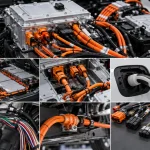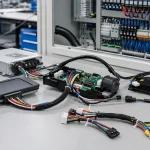
An EV startup adds a new ADAS camera package, heated seats, battery thermal management, a larger infotainment display and extra body control functions. The electrical team updates the wiring diagram, but packaging space inside the vehicle is already tight. The harness must pass through body cavities, survive vibration, avoid heat zones, separate high-voltage and low-voltage circuits, protect camera signals from EMI and still remain serviceable during vehicle assembly and repair.
In this situation, a Wire Harness is not only a bundle of automotive wires. It is a vehicle-level architecture component that affects safety, assembly speed, diagnostics, signal quality, vehicle weight, serviceability and long-term reliability. A professional automotive Wire Harness manufacturer should help buyers translate electrical architecture, vehicle zones, connector systems, wire materials, testing requirements and production documentation into a repeatable automotive harness solution.
Modern vehicles are becoming more electronic, more connected and more software-defined. EVs require high-voltage battery and charging harnesses. ADAS systems require stable camera, radar and sensor communication. Body control systems require more circuits in tighter spaces. Buyers who need project review, sample planning or quotation support can contact a Wire Harness supplier with wiring diagrams, connector part numbers, vehicle zone drawings, annual volume, prototype quantity and quality-document expectations.
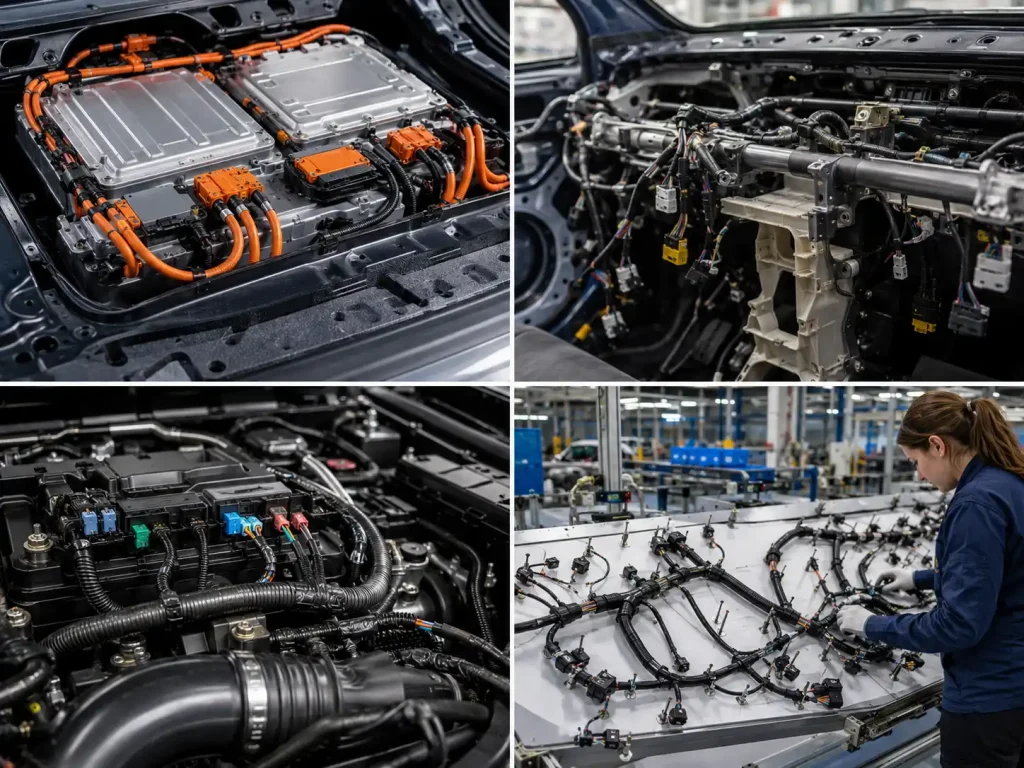
Quick Summary: Automotive Wire Harness Design Checklist
Automotive harness design starts with system function. A body harness, battery pack harness, seat harness, door harness, ADAS sensor harness and high-voltage EV harness do not share the same risk profile. A low-voltage lighting circuit may focus on voltage drop and connector sealing. A camera harness may focus on shielding and signal integrity. A high-voltage battery harness may focus on insulation resistance, HV interlock, shielding, orange cable identification and strict electrical testing.
For general sourcing structure, engineering and procurement teams can also review this Custom Wire Harness buying guide for OEM engineers and procurement teams. Automotive projects, however, require additional attention to vehicle packaging, APQP/PPAP expectations, traceability, weight reduction, vibration, water exposure, thermal cycling and engineering change control.
| Design Area | Vehicle Risk | Buyer Should Confirm | Supplier Proof |
|---|---|---|---|
| Electrical architecture | Wrong circuit grouping | LV, HV, signal and safety circuits | Wiring diagram review |
| Wire selection | Heat or voltage drop | Gauge, insulation, temperature class | Wire datasheet |
| Connector system | Water ingress or looseness | IP rating, lock, seal, mating cycles | Connector specification |
| Routing | Abrasion or assembly interference | Bend radius, clips, grommets, service loops | 3D layout or harness drawing |
| EMI control | Sensor faults or signal noise | Shielding, grounding, separation | Cable structure and test plan |
| Quality documents | OEM rejection | PPAP, FAI, traceability, COC | Supplier documentation |
What Is an Automotive Wire Harness?
Vehicle-Level Electrical System Backbone
An automotive Wire Harness organizes wires, cables, connectors, terminals, seals, sleeves, tapes, clips, grommets, relays, fuses, high-voltage cables, shielding and labels into a controlled assembly. Its job is to distribute power and signals across vehicle systems while supporting safe assembly, stable function, diagnostics and serviceability.
Automotive wire harnesses are used in body control systems, lighting, infotainment, ADAS, sensors, cameras, seat systems, door modules, HVAC, battery management systems, powertrain circuits, charging systems, motor inverters, thermal management systems, telematics, diagnostic systems and safety-related circuits. The harness must work with the vehicle structure, not against it.
Automotive Wire Harness vs Industrial Wire Harness
Automotive and industrial harnesses share some manufacturing processes, but their design priorities are not identical. A vehicle harness must fit tight packaging zones, reduce weight, survive road vibration, resist water and temperature cycling, support diagnostic strategies and meet automotive quality documentation expectations. Industrial harnesses often focus on machinery heat, oil, dust, movement, cabinet routing and plant maintenance.
For harsh-environment machinery decisions, buyers may compare related logic from this Custom Wire Harness for industrial applications guide. In vehicle systems, the additional challenges usually come from weight pressure, platform variants, PPAP documentation, EV high-voltage safety, ADAS signal integrity and strict engineering change control.
| Factor | Automotive Wire Harness | Industrial Wire Harness |
|---|---|---|
| Environment | Heat, vibration, moisture, vehicle motion | Factory heat, oil, dust, machine vibration |
| Packaging | Tight vehicle body cavities | Cabinets, machine frames, moving modules |
| Weight pressure | Very high | Medium to high |
| Quality system | APQP/PPAP often required | Project-specific QC |
| EMI concern | ADAS, infotainment, sensors, EV systems | Motors, drives, sensors |
| Validation | Thermal, vibration, water, electrical | Application-specific tests |
Step 1: Define the Vehicle System and Electrical Architecture
Low-Voltage Circuits
Low-voltage automotive circuits may include 12V systems, 24V commercial vehicle systems, body control, lighting, sensors, actuators, infotainment, seat adjustment, door modules, HVAC controls, telematics and ADAS support circuits. These circuits may appear simple, but they still require controlled wire gauge, voltage drop calculation, connector reliability, fuse strategy, grounding, routing and labeling.
For example, a door harness must survive repeated bending. A seat harness must tolerate movement, vibration and occupant adjustment cycles. A lighting harness may require sealed connectors if it runs near exterior zones. A body control harness must remain easy to assemble and diagnose in the vehicle plant.
High-Voltage EV and Hybrid Circuits
EV and hybrid vehicle platforms add high-voltage battery cables, inverter cables, motor cables, on-board charger cables, DC/DC converter cables, charging port cables, battery pack wiring, thermal management wiring and HV interlock loops. These circuits demand stricter insulation, shielding, connector sealing, creepage and clearance awareness, HV identification, hi-pot testing and insulation resistance verification.
High-voltage harnesses should not be treated as larger versions of low-voltage wiring. They require different design logic, different safety review, different assembly control and different validation. Buyers should confirm whether the supplier has experience with EV Wire Harness production, high-voltage testing and traceability.
Signal and Communication Circuits
Modern vehicles include CAN, LIN, Ethernet, camera links, radar support, ultrasonic sensors, lidar-related circuits, GPS antennas, infotainment data lines and battery management communication. These circuits are sensitive to noise, routing length, shielding, grounding, connector quality and mechanical stability.
If ADAS signals are unstable, the issue may not be the sensor itself. It may come from routing, shielding, connector looseness, water ingress or vibration. Automotive harness design must protect the signal from the first drawing, not only after test failure.
Step 2: Select Wire Gauge Insulation and Cable Type
Wire Gauge Current and Voltage Drop
Wire gauge should be selected by continuous current, peak current, voltage drop, circuit length, ambient temperature, bundle derating, terminal compatibility, fuse coordination and weight target. Automotive programs often use thin-wall wire where appropriate because weight and packaging space matter. However, wire size should never be reduced without confirming heat, voltage drop and mechanical durability.
Long routing paths can create voltage drop, especially in low-voltage systems. Seat motors, pumps, lighting circuits, fans and actuators may require current analysis. High-current battery and power circuits require stronger thermal and insulation review. The correct wire is the one that meets electrical load, routing space, temperature zone and validation requirements together.
| Circuit Type | Common Design Concern | Wire Selection Focus |
|---|---|---|
| Lighting | Voltage drop and connector reliability | Correct gauge and sealed connectors |
| Sensor circuits | Signal stability | Shielding and low-noise routing |
| Seat motors | Current and movement | Flexible wire and strain relief |
| Door harness | Repeated bending | Flex life and bend radius |
| Battery HV cable | Insulation and thermal safety | HV-rated cable and testing |
| ADAS camera cable | Signal integrity | Shielding and impedance control |
Insulation Materials for Vehicle Conditions
Automotive harnesses may use PVC, XLPE, TPE, silicone, PTFE, FEP, irradiated cross-linked insulation, thin-wall automotive wire and high-temperature wire depending on vehicle zone. Cabin areas may prioritize flexibility, low noise and compact routing. Engine bay areas require heat and oil resistance. Exterior or underbody zones require sealing and abrasion protection. Battery areas require insulation integrity and thermal stability.
Material choice should follow vehicle zone. A wire that works behind the dashboard may not survive near the engine, battery pack, wheel well or underbody. A buyer should always specify the installation location when requesting a quote.
Step 3: Connector Terminal and Seal Design
Connector Selection by Location
Connector location determines connector risk. Cabin connectors usually face lower water exposure, but packaging and serviceability matter. Engine bay connectors face heat, vibration, oil and sealing challenges. Exterior connectors face water, dust, road debris, salt spray and UV exposure. Battery and EV connectors require voltage rating, shielding, temperature review, HV interlock and safety validation. ADAS connectors require signal integrity, stable locking and vibration resistance.
Buyers should not approve a connector only because it fits the pin count. They should review current rating, voltage rating, sealing level, mating cycles, locking design, cable diameter range, terminal system, vibration behavior, assembly process, availability and lead time.
Terminal Crimping and Pull Force
Crimp quality is a major reliability factor. A poor crimp can create heat, voltage drop, intermittent signals or terminal pull-out. Automotive harness buyers should define strip length, crimp height, conductor brush, insulation support, terminal plating, tooling condition, pull force, crimp cross-section, applicator maintenance and operator training requirements.
| Failure Mode | Likely Cause | Design or Process Control |
|---|---|---|
| Intermittent signal | Loose terminal or vibration | Terminal retention and locking connector |
| Overheating | Undersized wire or poor crimp | Gauge calculation and crimp control |
| Water ingress | Seal mismatch or poor assembly | IP-rated connector and seal verification |
| Voltage drop | Long run or undersized cable | Circuit calculation |
| EMI noise | Poor shielding or routing | Shielded cable and separation |
| Broken door wire | Repeated flexing | Flex cable and bend radius review |
Step 4: Harness Routing Packaging and Protection
2D Wiring Diagram vs 3D Harness Layout
A 2D wiring diagram shows circuits, but a 3D harness layout shows whether the harness can physically fit the vehicle. Both are necessary. The drawing must show branch lengths, connector orientation, clip positions, grommet locations, service loops, bend radius, sharp-edge avoidance, heat shielding, HV/LV separation, assembly sequence and repair access.
Routing should consider body cavities, frame openings, door hinges, seat tracks, dashboard packaging, battery enclosure boundaries, water paths, heat zones and service points. A harness that is electrically correct but difficult to install can slow assembly and increase defect risk.
Tapes Sleeves Grommets and Clips
Protection components may include PVC tape, cloth tape, PET braid, corrugated conduit, heat-resistant sleeve, aluminum heat shield, rubber grommet, cable gland, clip, bracket, boot, foam noise-reduction wrap and protective covers. Cabin harnesses may need noise reduction and neat appearance. Engine bay harnesses need heat, oil and abrasion resistance. Exterior harnesses need water and salt protection. Door and seat harnesses need flex control. Battery harnesses need high-voltage isolation and clear routing separation.
Step 5: EMI Shielding Grounding and Signal Integrity
Why EMI Matters in Modern Vehicles
Modern vehicles contain EV inverters, electric motors, DC/DC converters, on-board chargers, ADAS sensors, cameras, infotainment systems, communication modules and many ECUs. These systems can create or receive electromagnetic interference. A poor shielding or grounding strategy can create sensor faults, unstable communication or intermittent diagnostics.
EMI control may require shielded cable, twisted pairs, defined grounding points, shield termination control, routing separation, connector shielding, cable length control and separation from noise sources. Buyers should ask suppliers whether shielding is built according to the design requirement and whether shield termination is controlled in production.
ADAS Sensor Harness Requirements
ADAS harnesses may connect cameras, radar modules, lidar-related systems, ultrasonic sensors, ECUs and gateway modules. These harnesses require signal quality, low latency, stable connector locking, vibration protection, water sealing, controlled routing and serviceability after repair. A small connector issue can affect a driver assistance function, creating expensive diagnostic work and customer dissatisfaction.
Step 6: Weight Reduction and Packaging Efficiency
Why Harness Weight Matters
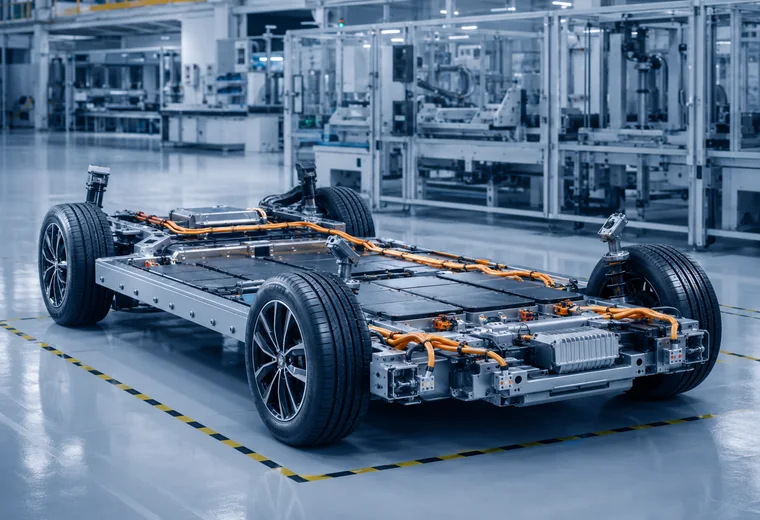
The Wire Harness is one of the heavier electrical assemblies in a vehicle. Weight affects EV range, fuel economy, packaging space, assembly ergonomics and material cost. Automotive teams often seek thinner wires, optimized routing, aluminum cable where appropriate, modular sections and local controllers to reduce total wire length.
However, weight reduction must not weaken reliability. Reducing gauge, removing protection, or simplifying connectors without validation can create heat, noise, abrasion or service problems. The best weight reduction comes from system architecture and routing efficiency, not random material reduction.
Zonal Architecture and Modular Harness Design
Modern vehicle electrical architecture is moving toward zonal control. Instead of routing every circuit back to a central point, local controllers manage functions by vehicle zone. This can reduce wire length, lower weight, simplify assembly and improve diagnostics. It can also increase electronic control complexity, so system-level engineering becomes more important.
Modular harness design can help production and service. Separate front, rear, battery, cabin, door, seat and ADAS harness modules can be assembled and tested individually. The challenge is managing connector count, interface reliability and revision control across modules.
Step 7: Thermal Water Vibration and Durability Testing
Environmental Validation
Automotive harnesses may require thermal cycling, high-temperature exposure, low-temperature exposure, humidity, salt spray, water spray, dust exposure, chemical resistance, fluid exposure and UV exposure depending on vehicle zone. A harness inside the cabin does not need the same validation as an underbody connector or battery enclosure interface.
Validation should match the location. Engine bay harnesses require heat and vibration review. Exterior harnesses require water and corrosion-related review. Door harnesses require flex cycling. High-voltage EV harnesses require insulation and electrical safety validation.
Mechanical and Electrical Validation
Mechanical and electrical validation may include continuity, open circuit, short circuit, miswire, hi-pot, insulation resistance, contact resistance, voltage drop, crimp pull force, terminal retention, connector mating/unmating, vibration testing, bend/flex cycling, dimensional inspection and functional testing. Buyers should define which tests are required at prototype, pilot and production stages.
| Test Type | Purpose | Automotive Use |
|---|---|---|
| Continuity | Confirms circuits | All harnesses |
| Hi-pot | Verifies insulation strength | HV and safety-related circuits |
| Insulation resistance | Checks leakage risk | EV battery and wet-zone harnesses |
| Pull force | Confirms crimp strength | Terminated wires |
| Vibration | Checks mechanical stability | Engine bay and chassis harnesses |
| Thermal cycling | Confirms material durability | Engine bay, battery and exterior zones |
| Water ingress | Confirms sealing | Exterior and underbody connectors |
| Flex test | Checks repeated movement | Door, seat and tailgate harnesses |
Step 8: Automotive Quality Documents and Compliance
IATF 16949 APQP PPAP and Traceability
Automotive buyers often expect a supplier quality system that can support APQP, PPAP, FAI, control plans, process flow diagrams, PFMEA, MSA, SPC where needed, material traceability, lot control, ECO management, 8D problem solving, inspection records and test records. These documents help prove that the harness can be produced consistently, not only once.
Traceability matters because a field issue may require identifying wire lots, terminal lots, connector batches, tooling conditions, operators, inspection records and shipment batches. Without traceability, root-cause analysis becomes slower and disputes become harder to resolve.
Functional Safety and EV Safety Direction
Safety-related vehicle systems may require functional safety review, especially when the harness connects circuits related to braking, steering, battery safety, powertrain control or driver assistance. EV high-voltage harnesses may require HV interlock, insulation resistance checks, diagnostic coverage, shielding and design-change traceability. Buyers should identify safety-related circuits early so supplier process control can match the risk.
Environmental and Material Compliance
Automotive projects may require RoHS, REACH, ELV-related material declarations, flammability documentation where required, halogen-free requests where applicable and customer-specific material reporting. These documents should be listed during RFQ, not requested after the production run is complete.
Step 9: Supplier Capability and Manufacturing Control
What an Automotive Wire Harness Factory Should Have
An automotive Wire Harness factory should support wire cutting, stripping, crimping, ultrasonic welding where needed, soldering if applicable, overmolding if needed, harness boards, continuity testers, hi-pot testers, pull force testers, crimp height measurement, crimp cross-section analysis, label printing, traceability, incoming inspection, process inspection, final inspection, PPAP support, engineering change control and packaging control.
Buyers should not judge supplier capability by sample speed only. Automotive production requires repeatability. The supplier must control materials, tooling, operators, testing, documentation, engineering changes and logistics. A fast sample without stable process control can create serious mass-production risk.
| Supplier Capability | Why It Matters | Buyer Question |
|---|---|---|
| Engineering review | Prevents design and routing errors | Can you review harness drawings before sampling? |
| Automotive experience | Matches OEM quality needs | Which vehicle systems have you supported? |
| Crimp process control | Reduces field failure | Do you monitor crimp height and pull force? |
| HV testing | Supports EV projects | Can you provide hi-pot and insulation records? |
| Traceability | Supports audits and recalls | Can you trace wires, terminals and connectors? |
| PPAP support | Supports OEM approval | Can you provide PPAP documents? |
| ECO control | Prevents wrong revisions | How do you manage drawing changes? |
Step 10: RFQ Checklist for Automotive Wire Harness Buyers
What Buyers Should Prepare Before Quotation
A strong automotive harness RFQ should include vehicle type, system application, low-voltage or high-voltage classification, circuit diagram, wire gauge, wire length, branch length, connector part numbers, terminal part numbers, pinout, shielding requirement, grounding strategy, temperature zone, water exposure, vibration zone, routing path, clip locations, grommet locations, protection sleeve, label requirements, test requirements, compliance documents, annual volume, prototype quantity, PPAP requirement, lead time, packaging, destination, service part requirement and engineering change process.
Incomplete RFQs lead to incomplete quotations. If the buyer does not state voltage class, connector requirements, test level or documentation expectations, suppliers may quote different assumptions. This makes price comparison misleading and creates risk during sample approval.
| RFQ Item | Why It Matters | Buyer Requirement |
|---|---|---|
| Vehicle system | Defines function and risk | Body, ADAS, battery, seat, door, powertrain or other system |
| Voltage class | Controls wire, connector and testing | Low voltage, high voltage or mixed architecture |
| Routing zone | Controls environment exposure | Cabin, engine bay, exterior, underbody, battery or door zone |
| Connector details | Controls fit and reliability | Part numbers, seals, locks, pinout and mating parts |
| Testing | Controls validation | Continuity, hi-pot, pull force, vibration, thermal or water test |
| Quality documents | Supports OEM approval | PPAP, FAI, COC, traceability, IMDS or customer forms |
Common Buyer Mistakes
Mistake 1: Treating Automotive Harnesses Like Simple Cable Assemblies
Automotive harnesses must fit vehicle zones, survive vibration, meet validation needs and support assembly processes. A simple cable assembly approach can miss routing, thermal, sealing, EMI and documentation risks.
Mistake 2: Ignoring EMI in EV and ADAS Circuits
EV and ADAS circuits can be sensitive to electromagnetic interference. Poor shielding, grounding or routing can create sensor faults, communication errors and unstable signals. EMI should be planned during design, not after validation failure.
Mistake 3: Choosing Connectors Without Considering Location
A connector inside the cabin may not survive the engine bay, underbody or exterior zone. Choose connectors by water exposure, heat, vibration, sealing, mating cycles and serviceability.
Mistake 4: No PPAP or Traceability Planning
Automotive programs often require structured quality documentation. Without PPAP planning, traceability and controlled inspection records, approval may be delayed even if the sample works electrically.
Mistake 5: Weak Engineering Change Control
Wrong revisions can enter production if ECO control is weak. Every drawing update should be documented, communicated and controlled through supplier production and inventory.
Industry Trends in Automotive Wire Harness Design
EVs Increase High-Voltage Harness Demand
Battery packs, inverters, charging systems, thermal management and DC/DC systems create more high-voltage harness requirements. This increases demand for HV cable, shielding, insulation resistance testing, HV interlock and specialized connector knowledge.
ADAS Requires Better Signal Integrity
Camera, radar, lidar-related and ultrasonic sensor systems require stable wiring, clean signal paths and reliable connectors. ADAS harnesses must handle vibration, moisture, routing constraints and EMI risk.
Zonal Architecture Reduces Long Wire Runs
Vehicle electrical architecture is moving toward zonal designs that reduce long wire runs and support modular assembly. This trend may reduce harness weight but increases the importance of system-level design and interface control.
Lightweight Wiring Becomes More Important
OEMs want thinner wires, optimized routing, modular sections, lighter materials and more efficient packaging. Weight reduction improves EV range and fuel economy, but it must be validated carefully.
More Buyers Demand Traceability and PPAP Support
Automotive programs require documented process control. Suppliers that can support APQP, PPAP, traceability, test records and change management will be better positioned for serious vehicle projects.
Final Recommendation: Design the Wire Harness as a Vehicle System Component
A modern automotive Wire Harness should be designed as part of the vehicle system, not as an isolated bundle of wires. Buyers should connect electrical architecture, physical routing, connector selection, wire materials, EMI control, high-voltage safety, validation testing, weight reduction and supplier documentation into one sourcing plan.
Before requesting an automotive Wire Harness quote, prepare the vehicle system, voltage class, wiring diagram, connector part numbers, pinout, routing path, temperature zone, shielding requirement, IP rating, test plan, annual volume, prototype quantity, PPAP needs and engineering change process. A professional custom automotive wiring harness manufacturer can help match harness design with modern vehicle architecture, reliability targets and production validation.
Frequently Asked Questions About Automotive Wire Harness Design
1. What is an automotive Wire Harness?
An automotive Wire Harness is a controlled assembly of wires, connectors, terminals, seals, sleeves, tapes, clips, grommets, relays, fuses, shielding and labels that distributes power and signals across vehicle systems. It connects body electronics, lighting, infotainment, sensors, ADAS modules, seat systems, door modules, battery systems, charging circuits, powertrain components and diagnostic systems. A well-designed automotive harness supports safe assembly, stable performance, serviceability and long-term reliability.
2. How is an EV Wire Harness different from a traditional vehicle harness?
An EV Wire Harness may include high-voltage cables, battery pack wiring, inverter cables, motor cables, charging port circuits, DC/DC converter wiring, thermal management circuits, shielding, HV connectors and high-voltage interlock loops. Compared with traditional low-voltage vehicle harnesses, EV harnesses require stronger insulation review, high-voltage testing, insulation resistance checks, creepage and clearance awareness, EMI control, thermal protection and stricter traceability.
3. What materials are used in automotive wire harnesses?
Common automotive wire harness materials include copper wire, thin-wall automotive cable, PVC insulation, XLPE insulation, TPE, silicone, PTFE or FEP for special conditions, corrugated conduit, cloth tape, PET braid, heat-resistant sleeves, rubber grommets, connector seals, clips, brackets and protective boots. The best material depends on vehicle zone, temperature, movement, water exposure, vibration, signal requirements and weight targets. Buyers should select materials by application risk, not only by cost.
4. What tests should automotive wire harnesses pass?
Automotive wire harness tests may include continuity, open circuit, short circuit, miswire, hi-pot, insulation resistance, contact resistance, voltage drop, crimp pull force, terminal retention, connector mating and unmating, vibration, thermal cycling, water ingress, flex cycling and dimensional inspection. The exact test plan depends on whether the harness is used in the cabin, engine bay, exterior, underbody, door system, ADAS module or EV high-voltage system.
5. How do I choose an automotive Wire Harness supplier?
Choose an automotive Wire Harness supplier with vehicle-system experience, engineering review capability, connector sourcing knowledge, crimp process control, test equipment, traceability, PPAP support, ECO management and stable production capacity. A qualified supplier should ask about vehicle type, voltage class, circuit diagram, connector part numbers, routing zone, temperature exposure, water exposure, vibration, shielding requirements, annual volume, prototype quantity and required quality documents before final quotation.
References
- IPC/WHMA-A-620 Requirements and Acceptance for Cable and Wire Harness Assemblies, Author: IPC and WHMA Technical Committee, Institution: IPC International and WHMA, Source: Cable and Wire Harness Assembly Standard.
- ISO 6722 Road Vehicles – Single-Core Cables, Author: ISO Technical Committee Contributors, Institution: International Organization for Standardization, Source: Automotive Cable Standard.
- ISO 26262 Road Vehicles Functional Safety, Author: ISO Technical Committee Contributors, Institution: International Organization for Standardization, Source: Automotive Functional Safety Standard.
- IATF 16949 Automotive Quality Management System Requirements, Author: International Automotive Task Force Contributors, Institution: International Automotive Task Force, Source: Automotive Quality Management Standard.
- APQP and Control Plan Reference Manual, Author: AIAG Technical Contributors, Institution: Automotive Industry Action Group, Source: Automotive Product Quality Planning Reference.
- PPAP Production Part Approval Process Manual, Author: AIAG Technical Contributors, Institution: Automotive Industry Action Group, Source: Automotive Supplier Approval Reference.
- Electric Vehicle High-Voltage System Safety Guidance, Author: Automotive Engineering Contributors, Institution: SAE International and Vehicle Engineering Publications, Source: EV Electrical Safety Reference.
- Quality Management Systems Requirements, Author: ISO Technical Committee Contributors, Institution: International Organization for Standardization, Source: Quality Management Reference.
How Buyers Should Design and Source an Automotive Wire Harness
How should buyers start an automotive Wire Harness project?
Buyers should begin with vehicle system function. Identify whether the harness supports body electronics, ADAS, EV battery systems, lighting, doors, seats, powertrain, charging, thermal management or diagnostics. The system function determines voltage class, routing zone, connector design, shielding, testing and documentation.
Why is vehicle zone important?
Vehicle zone determines environmental risk. A cabin harness, engine bay harness, underbody harness, battery harness and door harness face different temperature, vibration, water, movement, EMI and serviceability requirements. One material or connector strategy cannot fit every zone.
What option works best for EV high-voltage systems?
EV high-voltage harnesses need HV-rated cables, insulation resistance validation, hi-pot testing, shield control, sealed connectors, HV interlock logic, orange identification and strict traceability. Buyers should work with suppliers that understand EV safety and documentation expectations.
What option works best for ADAS systems?
ADAS harnesses need strong signal integrity, stable connectors, shielding, routing separation, vibration resistance and sealing where sensors are exposed. Camera and sensor harnesses should be designed around signal performance, not only physical connection.
Consideration: What creates the highest automotive harness risk?
The highest risks usually come from weak routing review, poor crimp control, wrong connector location, insufficient EMI shielding, unclear high-voltage testing, missing PPAP planning, no traceability and uncontrolled engineering changes.
Recommendation
Select a supplier that can support engineering review, sample validation, crimp process control, electrical testing, traceability, PPAP documentation and ECO management. In automotive programs, a reliable process is as important as the physical harness.
Before ordering, send the supplier the wiring diagram, vehicle zone, connector part numbers, voltage class, routing path, shielding requirement, test plan, annual volume, prototype stage and quality documentation needs. A professional Wire Harness supplier can recommend a safer, more manufacturable automotive harness solution.